For laboratory research use only — not for human or veterinary use. Not evaluated by the U.S. FDA.
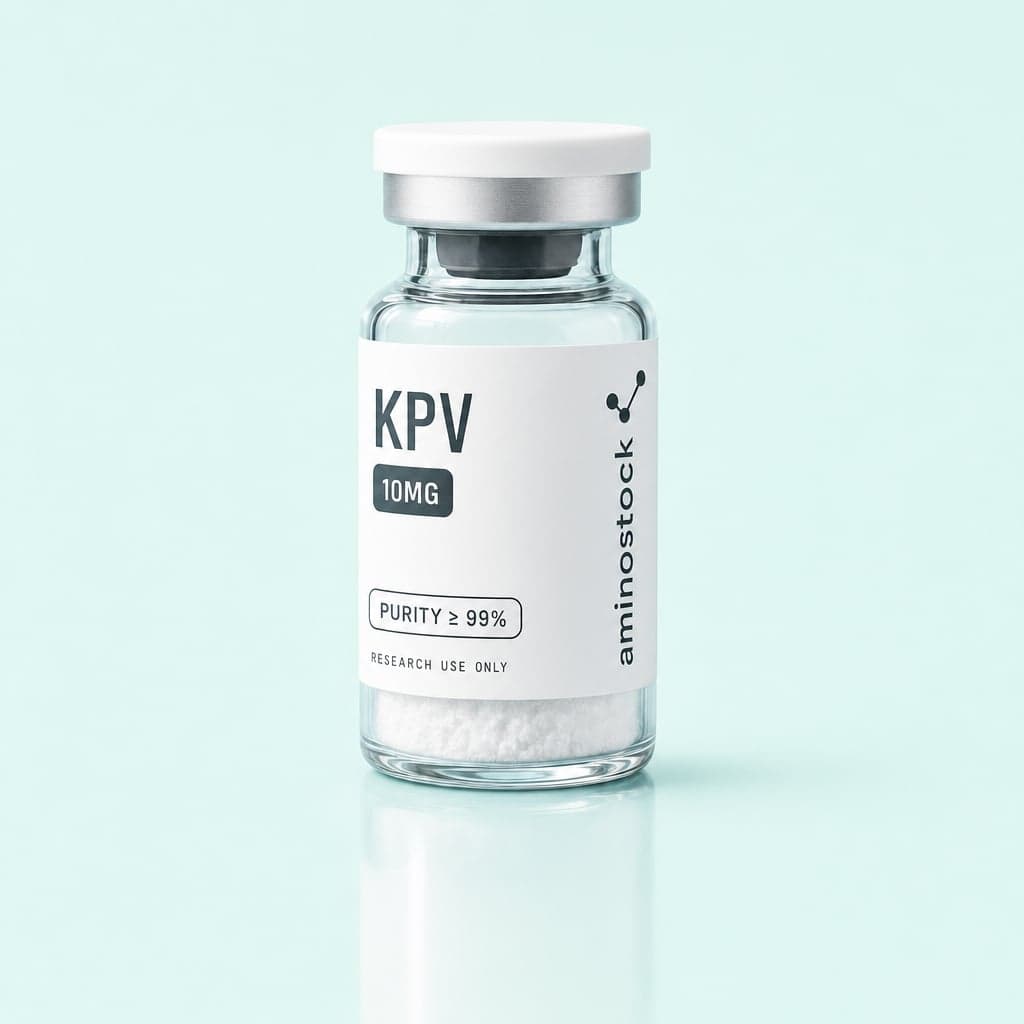
Cellular Peptide
KPV
A tripeptide fragment of α-MSH studied in preclinical models for its modulation of inflammatory signaling through the NF-κB pathway.
Size
Quantity
$39.99
Bundle & save
Order by 3:00 PM ET for same-day dispatch
Cutoff 3:00 PM ET · same-day dispatch
Estimated arrival in 2 business days
Overnight shipping available
Free shipment protection included
KPV
1 × 10mg · $39.99
99% purity, QC passed
HPLC + mass-spec verified
Shipment protection
Free on every order
Free shipping over $150
Same-day dispatch before 3PM ET
About KPV
Structure and research context
KPV is the tripeptide Lys-Pro-Val, corresponding to residues 11 to 13 at the C-terminus of alpha-melanocyte-stimulating hormone (alpha-MSH), the tridecapeptide produced from proopiomelanocortin by post-translational processing. Work from the Münster group attributes most of the anti-inflammatory activity described for alpha-MSH in experimental systems to this C-terminal tripeptide. KPV has been characterized as a substrate of PepT1, the di- and tripeptide transporter expressed in intestinal epithelium. A related tripeptide, K(D)PT, corresponding to residues 193 to 195 of interleukin-1 beta, has been discussed alongside it by the same investigators.
KPV in the research literature
In intestinal epithelial cell lines (Caco2-BBE and HT29-Cl.19A) and Jurkat T cells stimulated with pro-inflammatory cytokines, nanomolar KPV inhibited NF-κB and MAP kinase signaling and reduced pro-inflammatory cytokine secretion, and uptake experiments with radiolabeled KPV indicated transport into cells via PepT1. In dextran sodium sulfate and TNBS murine colon-inflammation models, KPV was associated with lower pro-inflammatory cytokine expression, reduced myeloperoxidase activity and fewer histologic inflammatory infiltrates.
Experiments in mice expressing a nonfunctional melanocortin-1 receptor suggested that these responses are at least partly independent of MC1R signaling. Formulation studies have also loaded KPV into hyaluronic acid-functionalized polymeric nanoparticles of about 272 nm, which were internalized by colonic epithelial cells and macrophages.
Summarized from peer-reviewed literature for research context only; not a product claim. PubMed: 18092346 · 17934097 · 18061177 · 28143741
KPV Certificate of Analysis
Third-party tested · Independent analytical lab
10mg
99.48%latest
| Tested | Measured | Purity |
|---|---|---|
| Jul 2026Sterile | 12.39mg | 99.48% |
| Jun 2026 | 13.22mg | 99.01% |
| May 2026 | 12.14mg | 98.70% |
| Apr 2026 | 13.34mg | 99.42% |
| Apr 2026 | 13.44mg | 99.45% |
| Jan 2026Endotoxin | 11.90mg | 99.92% |
| Jan 2026 | 10.86mg | 99.84% |
| Dec 2025 | 11.36mg | 99.73% |
| Dec 2025 | 11.72mg | 99.67% |
Latest safety testing
- Sterility
- TAMC/TYMCJul 2026
- Endotoxin
- 0.211 EU/vialFeb 2026
30mg
98.55%latest
| Tested | Measured | Purity |
|---|---|---|
| Jul 2026 | 37.85mg | 98.55% |
| May 2026 | 34.46mg | 98.49% |
| Jan 2026MetalsEndotoxin | 35.62mg | 99.69% |
| Jan 2026 | 37.52mg | 99.80% |
| Jan 2026 | 31.76mg | 99.81% |
| Dec 2025 | 34.00mg | 99.51% |
| Oct 2025 | 32.57mg | 99.72% |
Latest safety testing
- Heavy metals
- As/Cd/Pb not detectedJan 2026
- Endotoxin
- 1.309 EU/vialJan 2026
Endotoxin, sterility, and heavy-metals reports are run on individual lots on a rotating basis, separate from the identity/purity assay above — not on every lot.
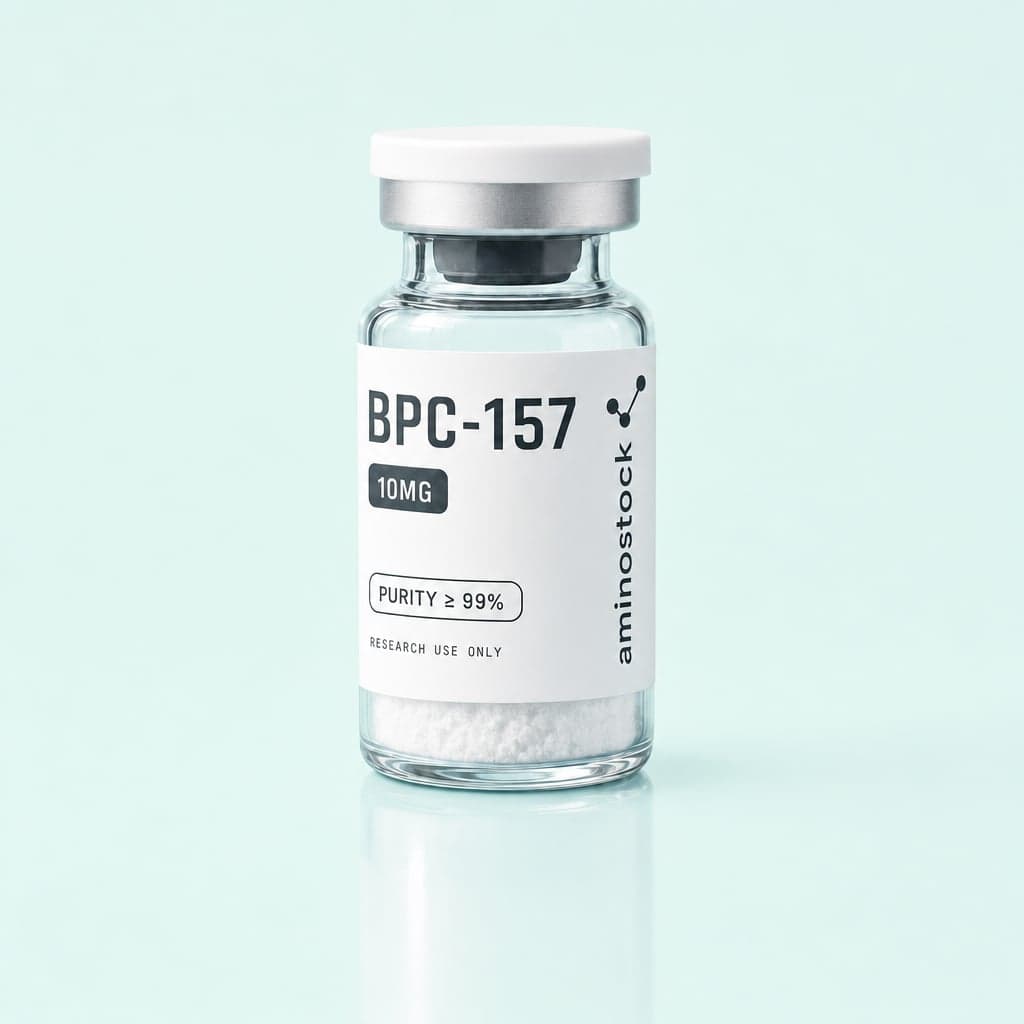
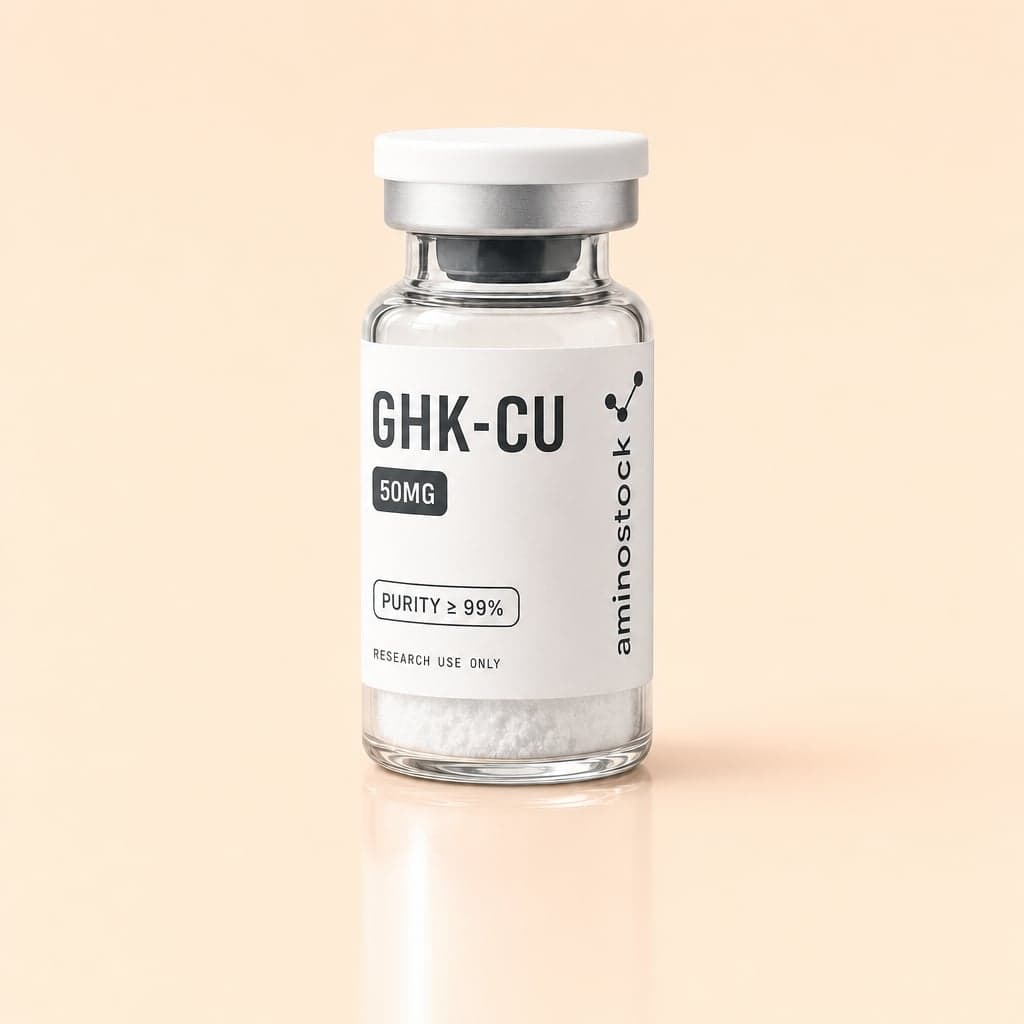
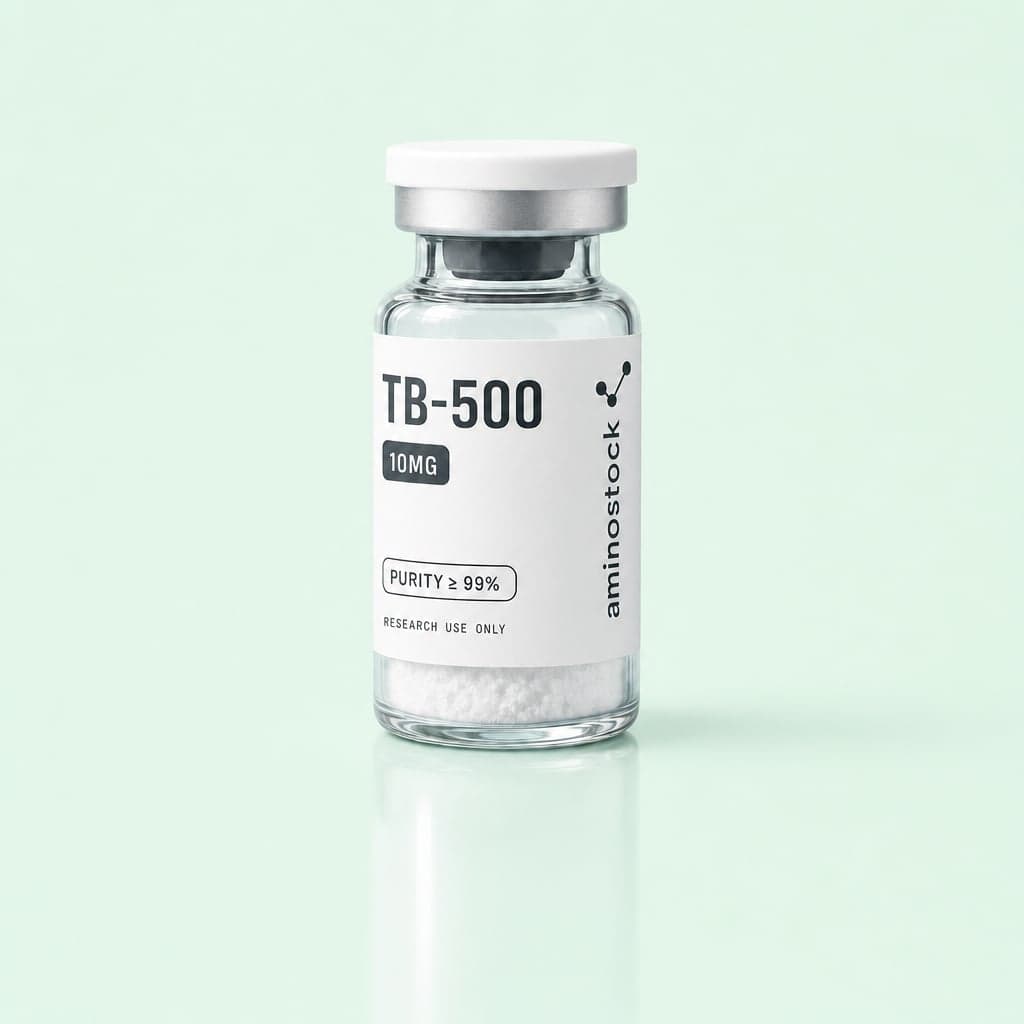
Frequently researched together
Commonly studied alongside KPV.
Compound information
Technical specifications
Molecular profile
| Type | Synthetic tripeptide |
| CAS number | 67727-97-3 |
| Sequence | Lys-Pro-Val (KPV) |
Storage & stability
- ❄️
Lyophilized (powder)
-20°C · stable 2+ years
- ❄️
Reconstituted
2–8°C · use within 30 days
KPV sources & references
Peer-reviewed literature, for research context
- Gastroenterology
PepT1-Mediated Tripeptide KPV Uptake Reduces Intestinal Inflammation
2008·DOI: 10.1053/j.gastro.2007.10.026·PMID: 18061177Dalmasso G, Charrier-Hisamuddin L, Nguyen HT, et al.
View source - Annals of the Rheumatic Diseases
alpha-MSH related peptides: a new class of anti-inflammatory and immunomodulating drugs
2007·DOI: 10.1136/ard.2007.079780·PMID: 17934097Luger TA, Brzoska T, Scholzen TE, et al.
View source - Molecular Therapy
Orally Targeted Delivery of Tripeptide KPV via Hyaluronic Acid-Functionalized Nanoparticles Efficiently Alleviates Ulcerative Colitis
2017·DOI: 10.1016/j.ymthe.2016.11.020·PMID: 28143741Xiao B, Xu Z, Viennois E, et al.
View source - Inflammatory Bowel Diseases
Melanocortin-derived tripeptide KPV has anti-inflammatory potential in murine models of inflammatory bowel disease
2008·DOI: 10.1002/ibd.20334·PMID: 18092346Kannengiesser K, Maaser C, Heidemann J, et al.
View source
More in Tissue Repair
Every Tissue Repair research compound in the catalog.
Important research notice
Not for human consumption. This product is sold exclusively for laboratory and in vitro research. It is not intended to diagnose, treat, cure, or prevent any disease.
Any research findings referenced on this page are drawn from published, peer-reviewed literature and are provided for educational context only. They are not product claims and should not be read as medical advice.
By purchasing, you confirm you are a qualified researcher and will handle this material in accordance with all applicable laws and institutional guidelines.