For laboratory research use only — not for human or veterinary use. Not evaluated by the U.S. FDA.
Peptide
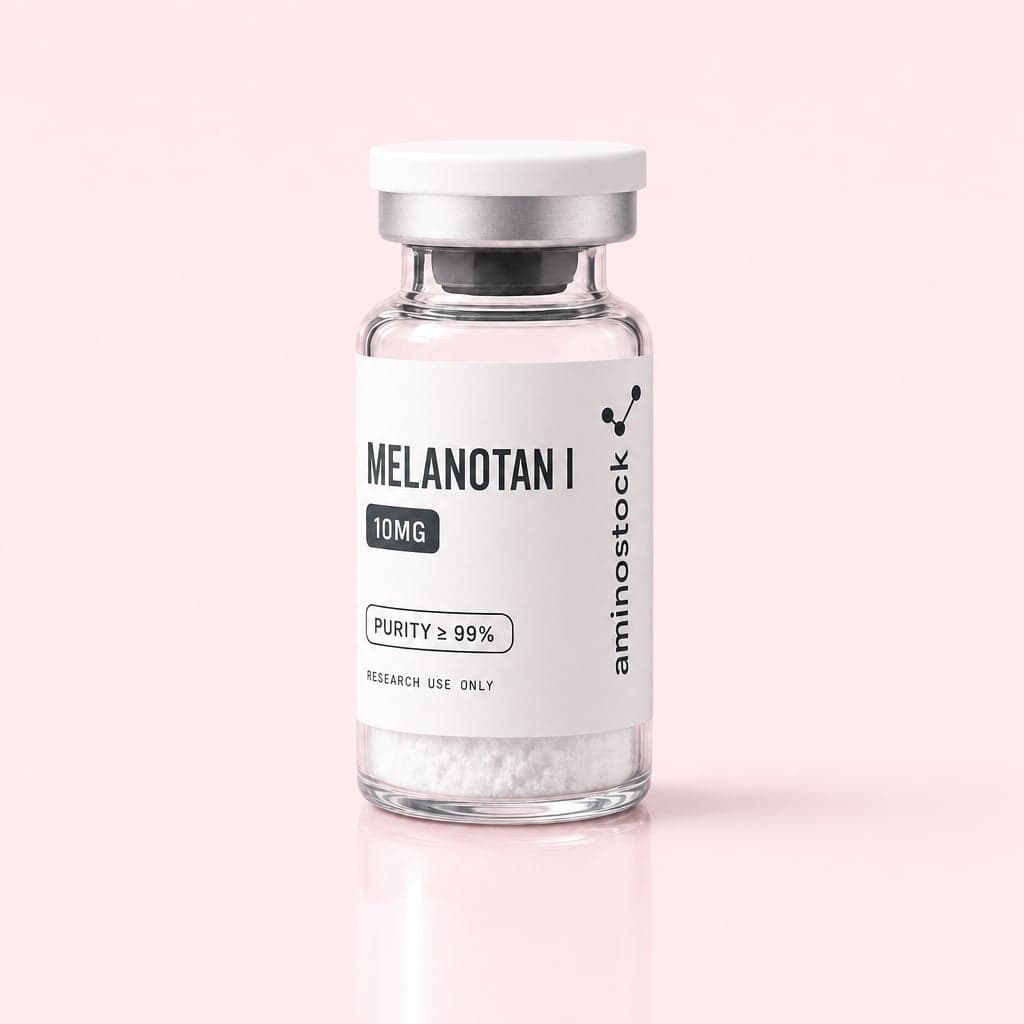
Melanotan I
A linear 13-amino-acid α-MSH analog ([Nle4, D-Phe7]-α-MSH), studied in receptor pharmacology for its high-affinity activity at MC1R and MC4R.
Quantity
$29.99
Bundle & save
Order by 3:00 PM ET for same-day dispatch
Cutoff 3:00 PM ET · same-day dispatch
Estimated arrival in 2 business days
Overnight shipping available
Free shipment protection included
Melanotan I
1 × 10mg · $29.99
99% purity, QC passed
HPLC + mass-spec verified
Shipment protection
Free on every order
Free shipping over $150
Same-day dispatch before 3PM ET
About Melanotan I
Structure and research context
Melanotan I, also known by the nonproprietary name afamelanotide, is a synthetic linear 13-residue analog of alpha-melanocyte-stimulating hormone (alpha-MSH) with the sequence Ac-Ser-Tyr-Ser-Nle-Glu-His-D-Phe-Arg-Trp-Gly-Lys-Pro-Val-NH2 (C78H111N21O19, about 1646.8 g/mol). It differs from the endogenous hormone at two positions, with norleucine replacing methionine at position 4 and D-phenylalanine replacing L-phenylalanine at position 7, and is therefore also designated [Nle4, D-Phe7]-alpha-MSH or NDP-MSH. The analog was first reported in 1980 by Sawyer, Hruby, Hadley and colleagues.
Melanotan I in the research literature
In its original characterization, [Nle4, D-Phe7]-alpha-MSH resisted degradation by serum enzymes and was about 26 times as potent as alpha-MSH in a mouse cell adenylate cyclase assay. Its principal target is the melanocortin-1 receptor (MC1R), a seven-transmembrane G-protein-coupled receptor. Site-directed mutagenesis of MC1R showed that the acidic residues Glu94, Asp117 and Asp121, together with aromatic residues in transmembrane helices 4 to 6, contribute to NDP-MSH binding affinity and potency.
NDP-MSH is not restricted to MC1R. It is also a high-affinity agonist at the melanocortin-4 receptor, and cryo-electron microscopy structures of MC4R-Gs complexes bound to NDP-alpha-MSH have described its binding mode, the role of transmembrane helix 3 and a calcium ion cofactor in ligand recognition, and TM6-regulated receptor activation.
Summarized from peer-reviewed literature for research context only; not a product claim. PubMed: 41547183 · 6777774 · 9287296 · 34561620
Melanotan I Certificate of Analysis
Third-party tested · Independent analytical lab
10mg
99.81%latest
| Tested | Measured | Purity |
|---|---|---|
| Jun 2026 | 10.52mg | 99.81% |
| May 2026 | 10.48mg | 99.81% |
| Mar 2026 | 10.39mg | 99.69% |
| Feb 2026 | 10.10mg | 99.93% |
| Jan 2026 | 10.50mg | 99.82% |
| Oct 2025 | 11.48mg | 99.89% |
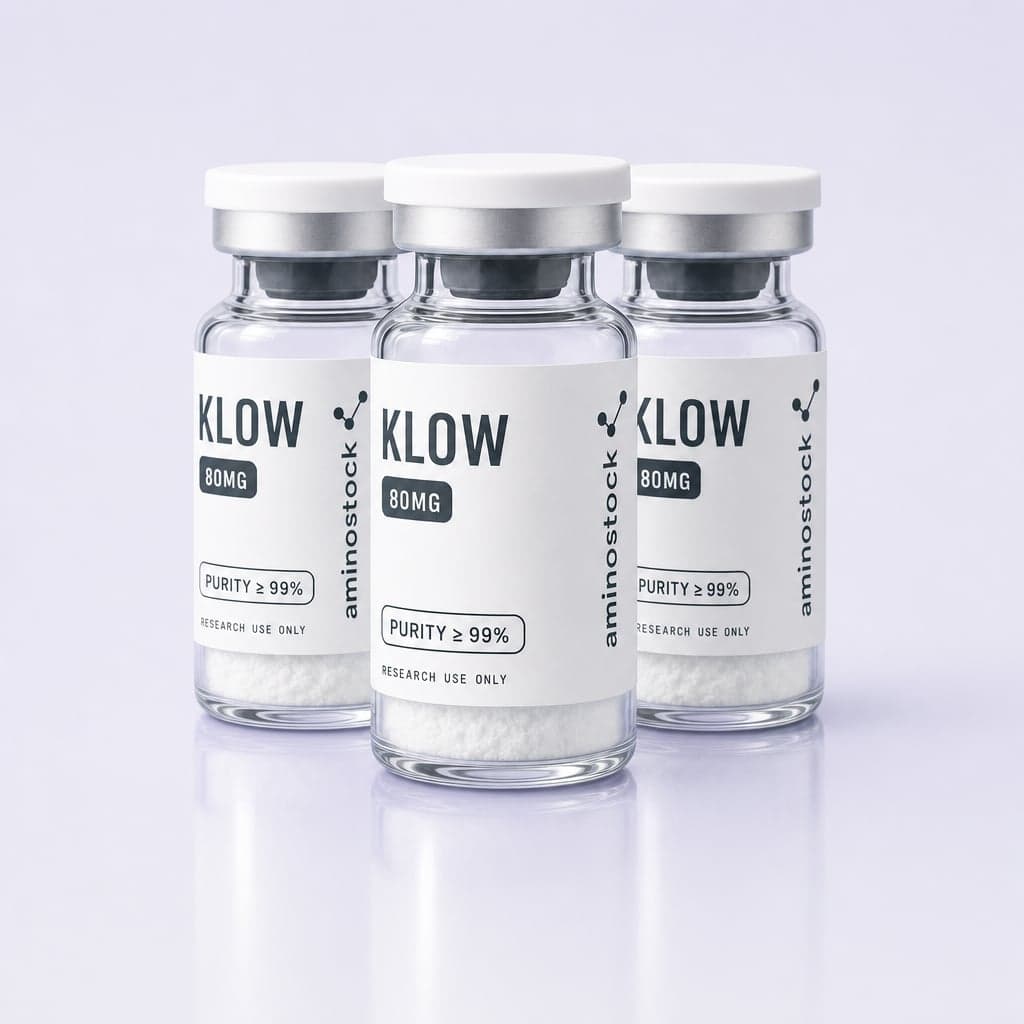
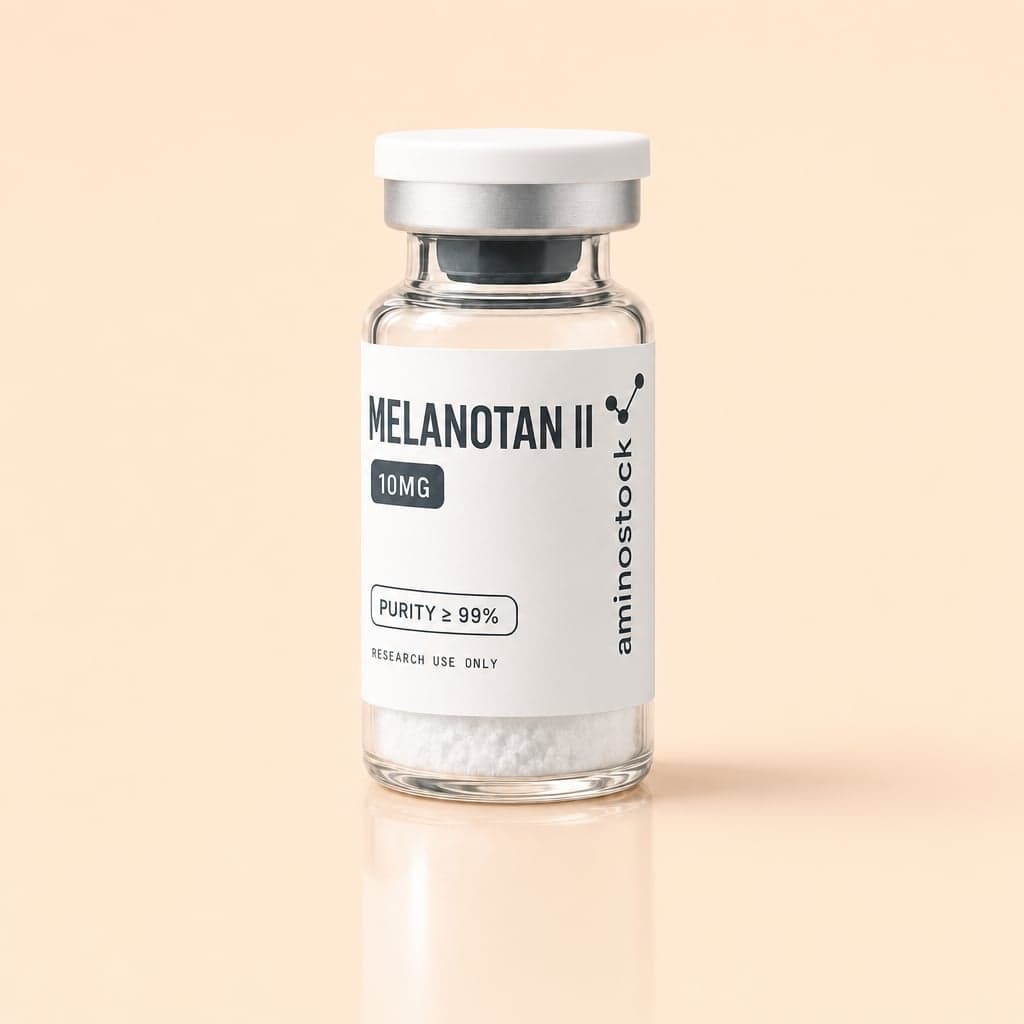
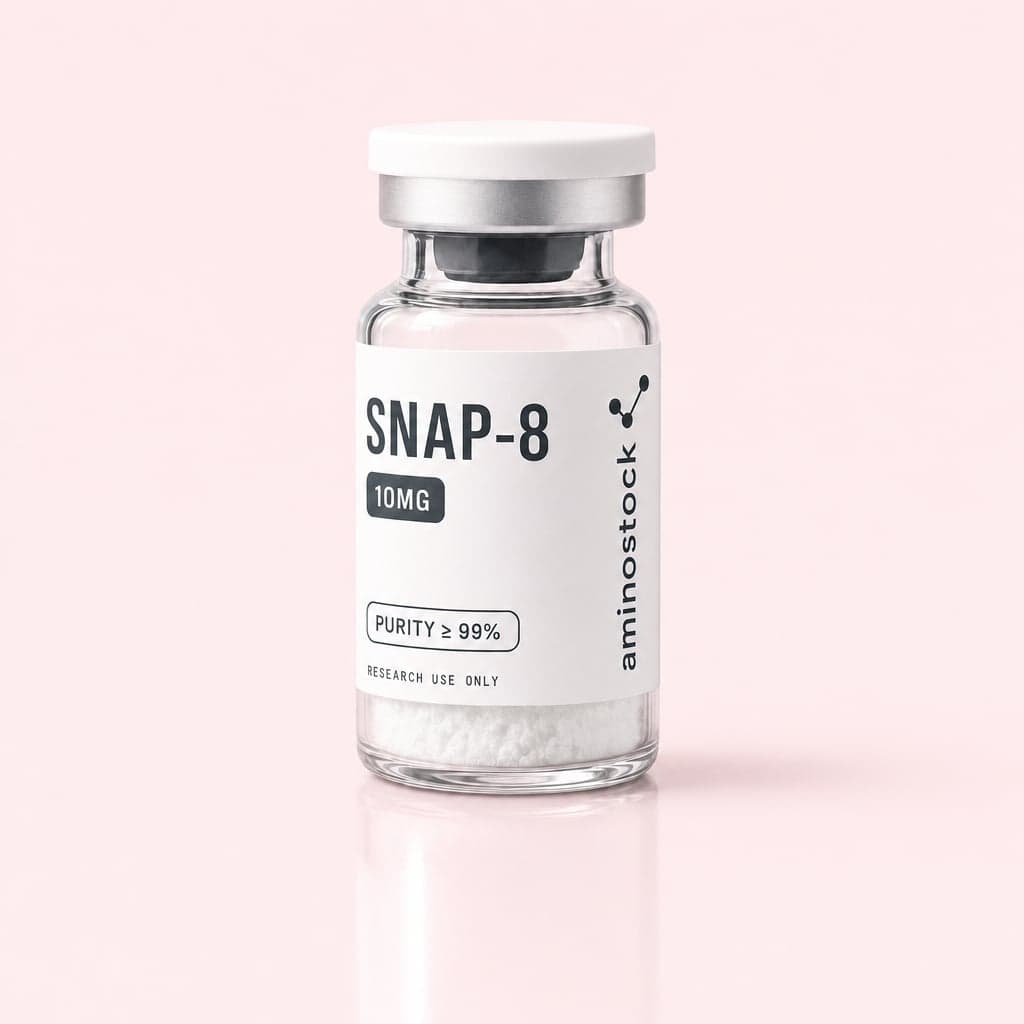
Frequently researched together
Commonly studied alongside Melanotan I.
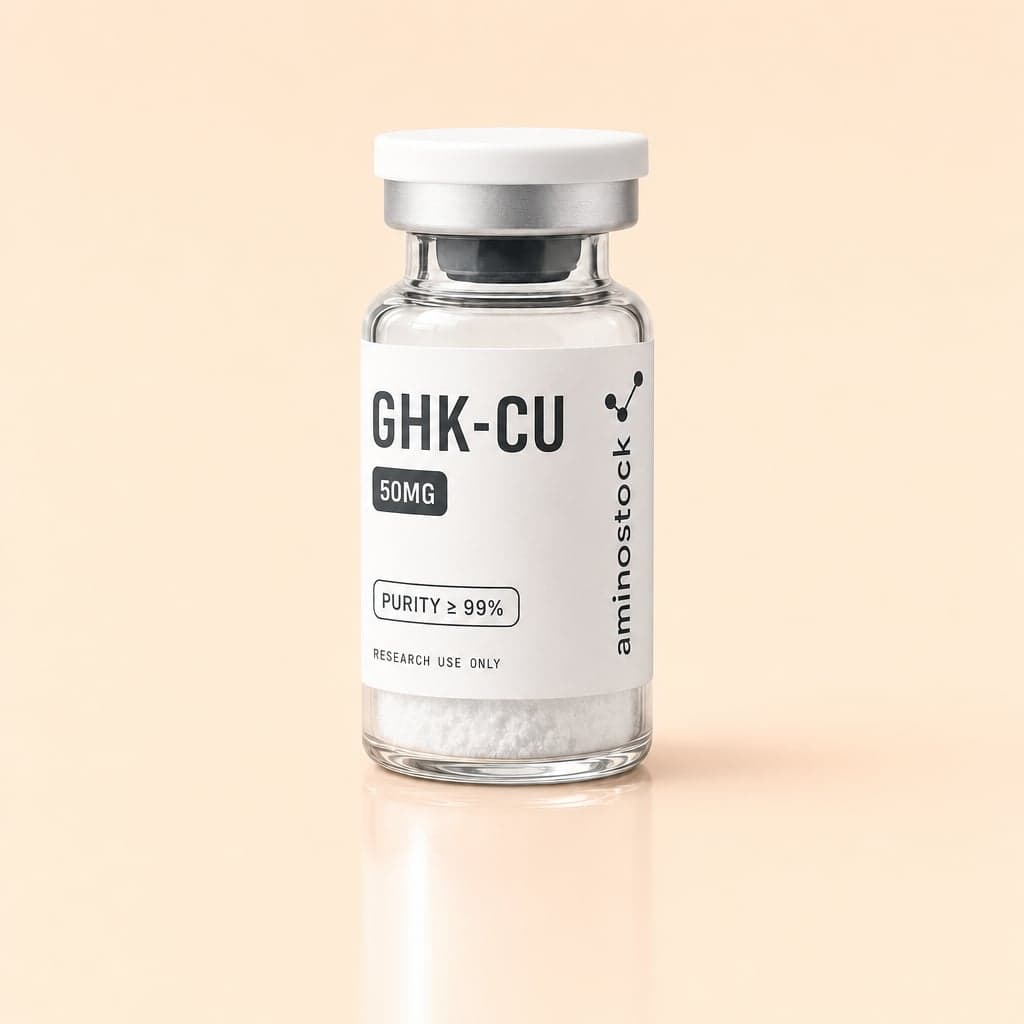
Compound information
Technical specifications
Molecular profile
| Type | Synthetic linear peptide |
| CAS number | 75921-69-6 |
| Molecular weight | 1646.8 g/mol |
| Amino acids | 13 |
| Sequence | Ac-Ser-Tyr-Ser-Nle-Glu-His-D-Phe-Arg-Trp-Gly-Lys-Pro-Val-NH2 |
| Formula | C78H111N21O19 |
Storage & stability
- ❄️
Lyophilized (powder)
-20°C · stable 2+ years
- ❄️
Reconstituted
2–8°C · use within 30 days
Melanotan I sources & references
Peer-reviewed literature, for research context
- New England Journal of Medicine
Afamelanotide for Erythropoietic Protoporphyria
2015·DOI: 10.1056/NEJMoa1411481·PMID: 26132941Langendonk JG, Balwani M, Anderson KE, et al.
View source - Clinical Pharmacokinetics
Pharmacokinetics and Pharmacodynamics of Afamelanotide and its Clinical Use in Dermatology
2017·DOI: 10.1007/s40262-016-0501-5·PMID: 28063031Minder EI, Barman-Aksoezen J, Schneider-Yin X.
View source - Journal of Drugs in Dermatology
Afamelanotide: An Orphan Drug with Potential for Broad Dermatologic Applications
2021·PMID: 33683075Wu R, Cotliar J.
View source
More in Dermal
Every Dermal research compound in the catalog.
Important research notice
Not for human consumption. This product is sold exclusively for laboratory and in vitro research. It is not intended to diagnose, treat, cure, or prevent any disease.
Any research findings referenced on this page are drawn from published, peer-reviewed literature and are provided for educational context only. They are not product claims and should not be read as medical advice.
By purchasing, you confirm you are a qualified researcher and will handle this material in accordance with all applicable laws and institutional guidelines.