For laboratory research use only — not for human or veterinary use. Not evaluated by the U.S. FDA.
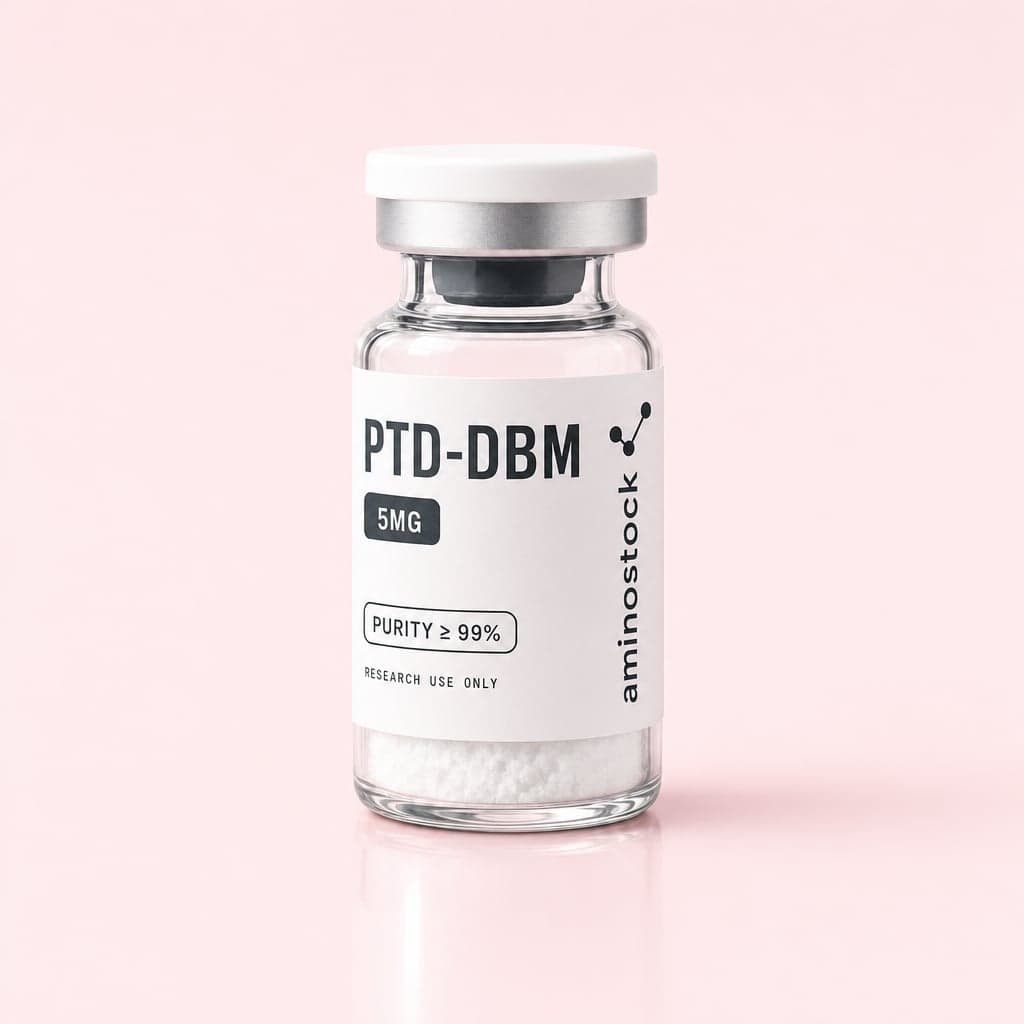
Dermal Peptide
PTD-DBM
A cell-penetrating peptide designed to disrupt the CXXC5–Dishevelled interaction, studied in animal models as a Wnt-pathway tool in dermal and follicular research.
Quantity
$79.99
Bundle & save
Order by 3:00 PM ET for same-day dispatch
Cutoff 3:00 PM ET · same-day dispatch
Estimated arrival in 2 business days
Overnight shipping available
Free shipment protection included
PTD-DBM
1 × 5mg · $79.99
99% purity, QC passed
HPLC + mass-spec verified
Shipment protection
Free on every order
Free shipping over $150
Same-day dispatch before 3PM ET
About PTD-DBM
Structure and research context
PTD-DBM is a synthetic cell-permeable peptide (C124H225N61O28S2, about 3,082.6 g/mol) that links a protein transduction domain (PTD) to a Dishevelled-binding motif (DBM). It was developed by the Choi laboratory at Yonsei University as a competitor peptide for the interaction between CXXC-type zinc finger protein 5 (CXXC5) and the Dishevelled (Dvl) protein. CXXC5 binds Dvl and acts as a negative feedback regulator of Wnt/β-catenin signaling, and PTD-DBM was designed to block that binding step so that the feedback loop is disrupted. The transduction domain is what allows the peptide to enter cells.
PTD-DBM in the research literature
In the originating study, overexpression and silencing of CXXC5 in vitro produced differential regulation of β-catenin, α-smooth muscle actin and collagen I, pointing to a role in myofibroblast differentiation and collagen production, and PTD-DBM activated β-catenin and collagen production in vitro by disrupting CXXC5-Dvl binding. CXXC5-deficient mice were used alongside the peptide to examine the pathway in skin.
A follow-up study extended this work to hair-follicle biology. CXXC5 reduced alkaline phosphatase activity and proliferation in cultured dermal papilla cells, and disrupting the CXXC5-Dvl interaction with the competitor peptide activated Wnt/β-catenin signaling and was associated with changes in hair-follicle cycling and follicle neogenesis endpoints in mouse models.
Summarized from peer-reviewed literature for research context only; not a product claim. PubMed: 26056233 · 28595998
Frequently researched together
Commonly studied alongside PTD-DBM.
Compound information
Technical specifications
Molecular profile
| Type | Cell-permeable synthetic peptide |
| CAS number | 1609454-11-6 |
| Molecular weight | 3,082.6 g/mol |
| Formula | C124H225N61O28S2 |
Storage & stability
- ❄️
Lyophilized (powder)
-20°C · stable 2+ years
- ❄️
Reconstituted
2–8°C · use within 30 days
More in Dermal
Every Dermal research compound in the catalog.
Important research notice
Not for human consumption. This product is sold exclusively for laboratory and in vitro research. It is not intended to diagnose, treat, cure, or prevent any disease.
Any research findings referenced on this page are drawn from published, peer-reviewed literature and are provided for educational context only. They are not product claims and should not be read as medical advice.
By purchasing, you confirm you are a qualified researcher and will handle this material in accordance with all applicable laws and institutional guidelines.