For laboratory research use only — not for human or veterinary use. Not evaluated by the U.S. FDA.
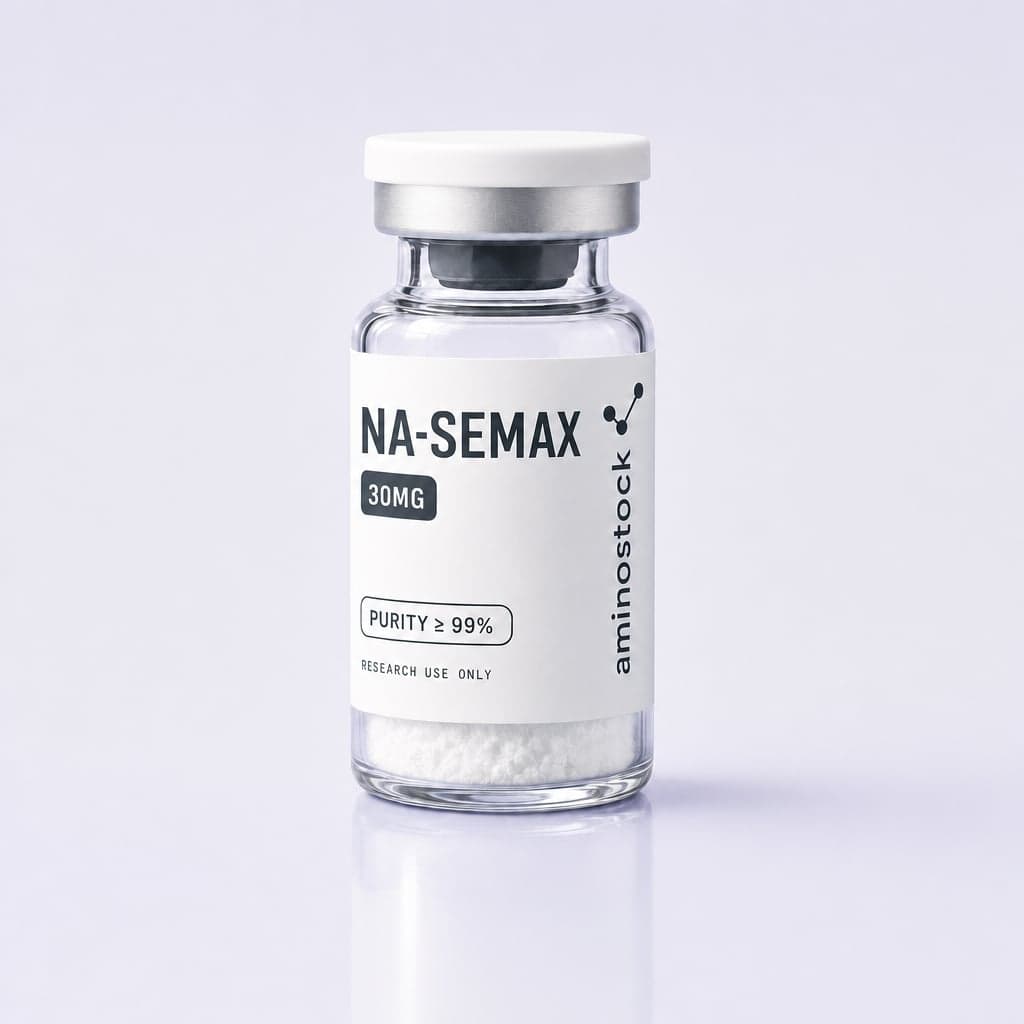
Neuropeptide
N-Acetyl Semax Amidate
An N-terminally acetylated, C-terminally amidated analog of semax — terminal modifications commonly used to improve peptide stability — studied alongside the parent peptide in nootropic and neurotrophic research.
Quantity
$68.99
Bundle & save
Order by 3:00 PM ET for same-day dispatch
Cutoff 3:00 PM ET · same-day dispatch
Estimated arrival in 2 business days
Overnight shipping available
Free shipment protection included
N-Acetyl Semax Amidate
1 × 30mg · $68.99
99% purity, QC passed
HPLC + mass-spec verified
Shipment protection
Free on every order
Free shipping over $150
Same-day dispatch before 3PM ET
About N-Acetyl Semax Amidate
Structure and research context
N-Acetyl Semax Amidate is a synthetic heptapeptide derivative of semax (Met-Glu-His-Phe-Pro-Gly-Pro) with an acetyl group on the N-terminal amine and an amide in place of the C-terminal carboxyl group. Its molecular formula, C39H54N10O10S (molecular weight 855.0 g/mol, CAS 2920938-90-3), differs from that of semax (C37H51N9O10S) by C2H3N, which matches the addition of an acetyl cap and the conversion of the terminal acid to an amide. The parent peptide combines the ACTH(4-7) fragment with a C-terminal Pro-Gly-Pro tripeptide.
N-Acetyl Semax Amidate in the research literature
Few published studies address the modified forms directly. A coordination-chemistry study of N-terminally acetylated semax (Ac-Semax, without the C-terminal amide) reported that acetylation changed the main copper(II) complex from a CuN4 to a distorted CuN3O chromophore and shifted its redox potential, while zinc(II) complexes formed with strength comparable to the parent. In SH-SY5Y cell cultures, the free N-terminal amine was reported to be needed for the parent peptide's activity against copper(II)-induced toxicity.
The rest of the relevant literature concerns unmodified semax. Rat studies have linked it to hippocampal BDNF and TrkB expression. Transcriptome work in rat middle cerebral artery occlusion models reported shifts in inflammation-related and neurotransmission-related gene expression. In degradation studies with nerve cells, the parent peptide was cleaved mainly to His-Phe-Pro-Gly-Pro and Pro-Gly-Pro.
Summarized from peer-reviewed literature for research context only; not a product claim. PubMed: 27586814 · 16996037 · 32580520 · 16637290
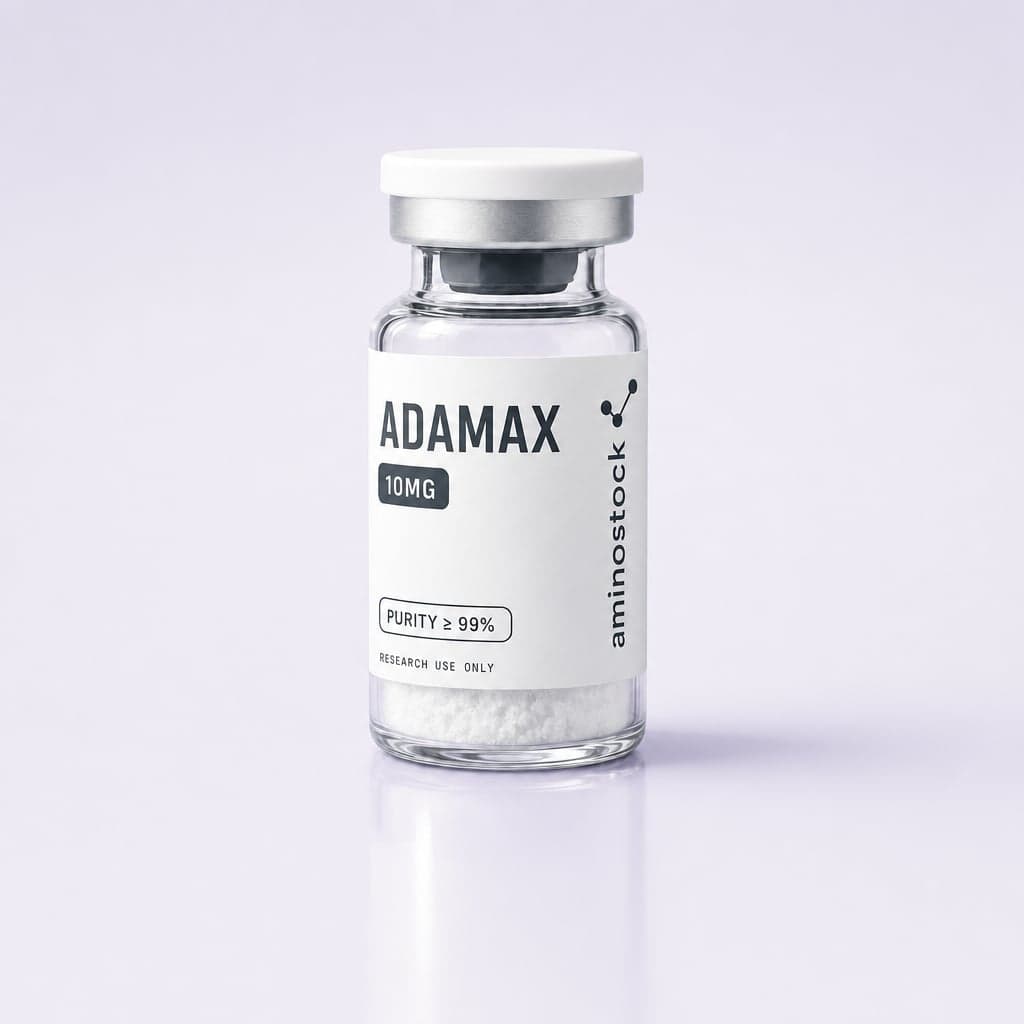
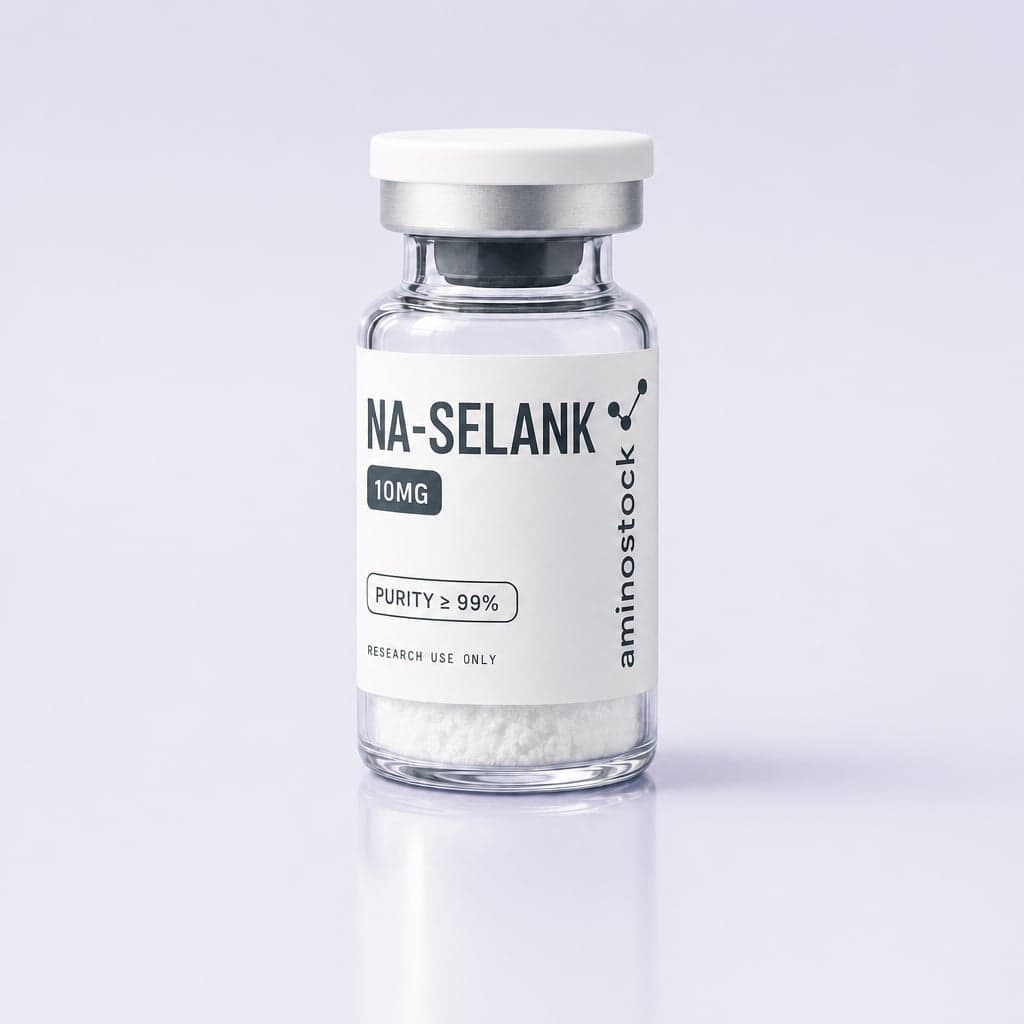
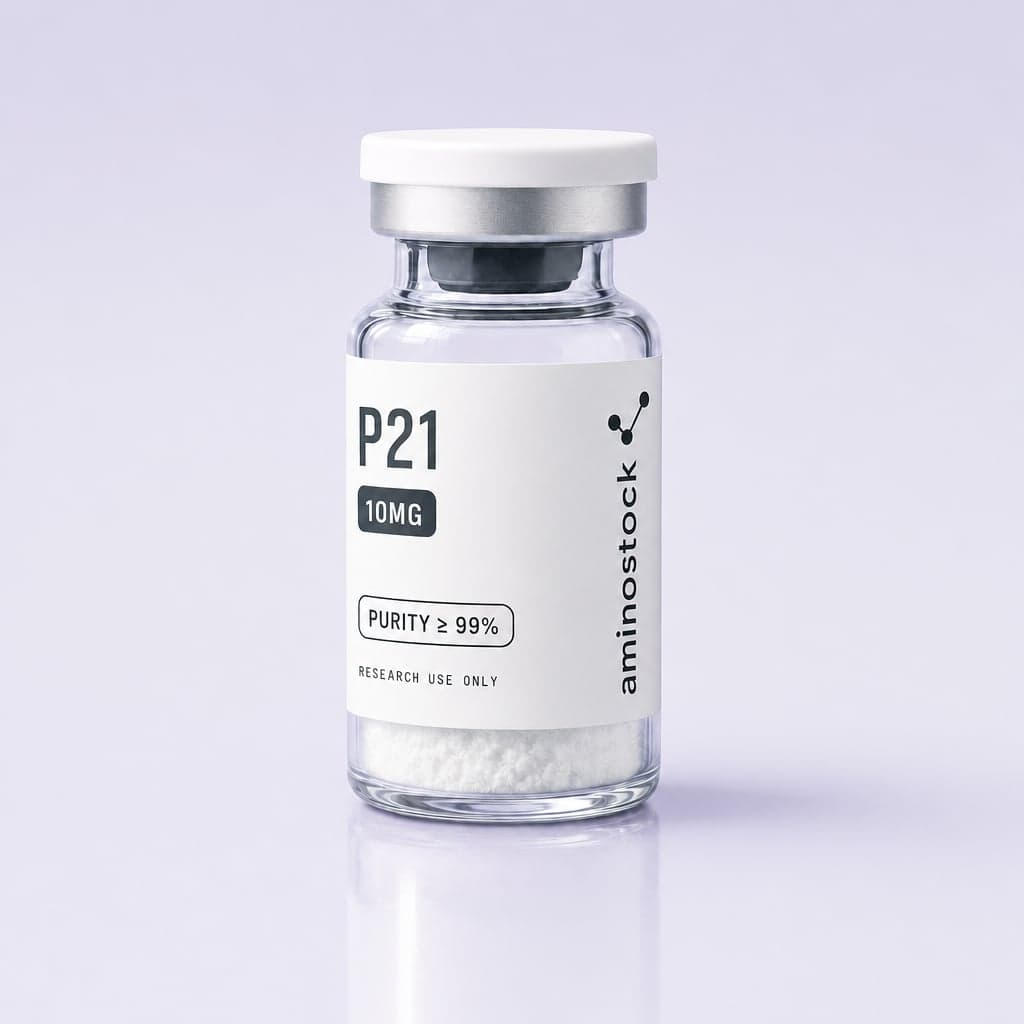
Frequently researched together
Commonly studied alongside N-Acetyl Semax Amidate.
Compound information
Technical specifications
Molecular profile
| Type | Synthetic heptapeptide (N-acetylated, C-amidated) |
| CAS number | 2920938-90-3 |
| Molecular weight | 855.0 g/mol |
| Amino acids | 7 |
| Formula | C39H54N10O10S |
Storage & stability
- ❄️
Lyophilized (powder)
-20°C · stable 2+ years
- ❄️
Reconstituted
2–8°C · use within 30 days
N-Acetyl Semax Amidate sources & references
Peer-reviewed literature, for research context
- Genes
Novel Insights into the Protective Properties of ACTH((4-7))PGP (Semax) Peptide at the Transcriptome Level Following Cerebral Ischaemia-Reperfusion in Rats
2020·DOI: 10.3390/genes11060681·PMID: 32580520Filippenkov IB, Stavchansky VV, Denisova AE, Yuzhakov VV, Sevan'kaeva LE, Sudarkina OY
View source - BMC genomics
The peptide semax affects the expression of genes related to the immune and vascular systems in rat brain focal ischemia: genome-wide transcriptional analysis
2014·DOI: 10.1186/1471-2164-15-228·PMID: 24661604Medvedeva EV, Dmitrieva VG, Povarova OV, Limborska SA, Skvortsova VI, Myasoedov NF
View source - Acta naturae
The Potential of the Peptide Drug Semax and Its Derivative for Correcting Pathological Impairments in the Animal Model of Alzheimer's Disease
2025·DOI: 10.32607/actanaturae.27808·PMID: 41479572Radchenko AI, Kuzubova EV, Apostol AA, Mitkevich VA, Andreeva LA, Limborska SA
View source - British journal of pharmacology
Semax peptide targets the μ opioid receptor gene Oprm1 to promote deubiquitination and functional recovery after spinal cord injury in female mice
2025·DOI: 10.1111/bph.70122·PMID: 40692165Liu R, Chen Y, Huang H, Li X, Lv J, Jiang L
View source
More in Neuro
Every Neuro research compound in the catalog.
Important research notice
Not for human consumption. This product is sold exclusively for laboratory and in vitro research. It is not intended to diagnose, treat, cure, or prevent any disease.
Any research findings referenced on this page are drawn from published, peer-reviewed literature and are provided for educational context only. They are not product claims and should not be read as medical advice.
By purchasing, you confirm you are a qualified researcher and will handle this material in accordance with all applicable laws and institutional guidelines.