For laboratory research use only — not for human or veterinary use. Not evaluated by the U.S. FDA.
Neuropeptide
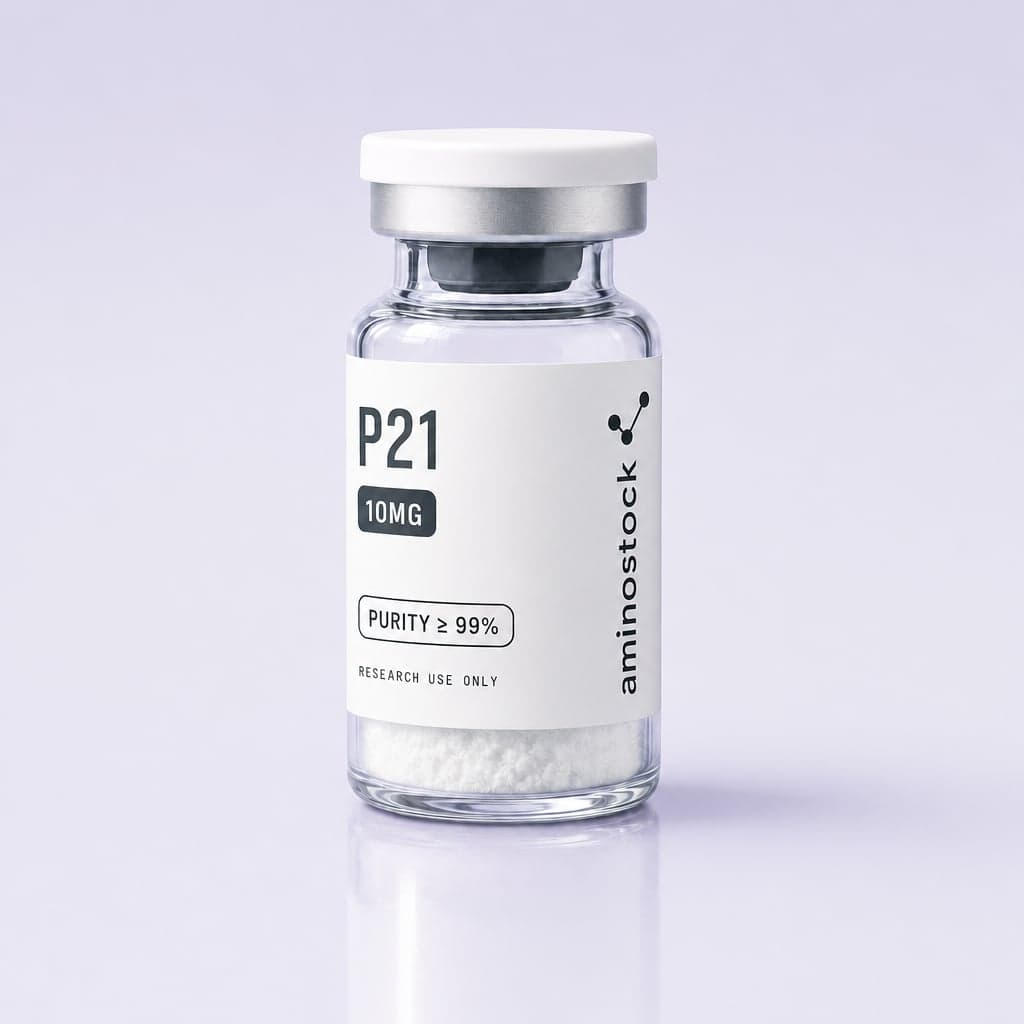
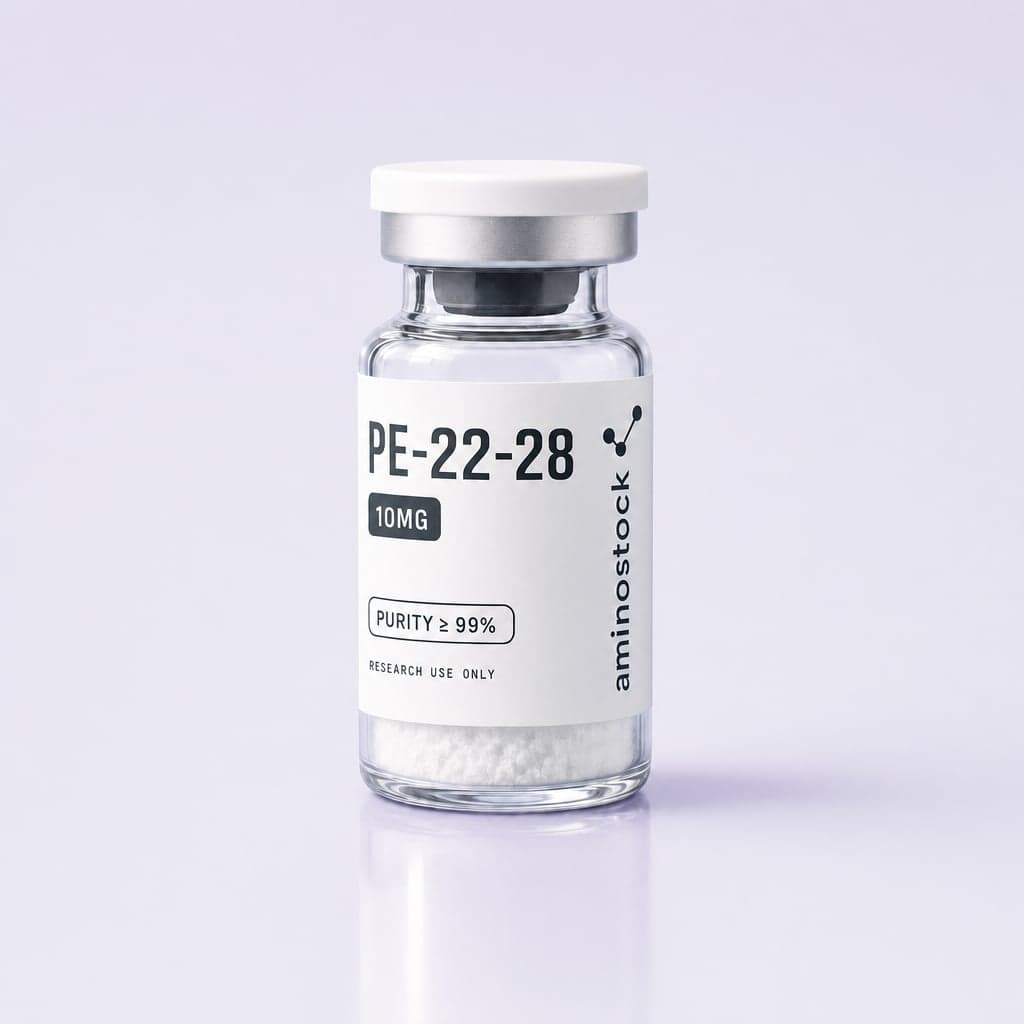
P21
A small peptidergic compound derived from a ciliary neurotrophic factor motif, studied in animal models of neurogenesis and neurotrophic signaling.
Quantity
$109.99
Bundle & save
Order by 3:00 PM ET for same-day dispatch
Cutoff 3:00 PM ET · same-day dispatch
Estimated arrival in 2 business days
Overnight shipping available
Free shipment protection included
P21
1 × 10mg · $109.99
99% purity, QC passed
HPLC + mass-spec verified
Shipment protection
Free on every order
Free shipping over $150
Same-day dispatch before 3PM ET
About P21
Structure and research context
P21, also written P021, is a small peptidergic compound with the structure Ac-DGGLAG-NH2. It was derived by epitope mapping from the most active region of ciliary neurotrophic factor (CNTF), yielding a tetrapeptide core. An adamantylated glycine was added at the C-terminus to increase blood-brain barrier permeability and reduce breakdown by exopeptidases. The N-terminal acetyl group and C-terminal amide shown in the structure are further terminal modifications. The literature describes it as a neurotrophic peptide mimetic.
P21 in the research literature
Studies of P021 have mostly tracked neurotrophic and synaptic markers in rodents. In aged rats, researchers reported increased BDNF expression and higher neurogenesis and synaptic marker levels than in aged vehicle controls. Hippocampal myo-inositol concentration, measured by magnetic resonance spectroscopy, was lower. In triple-transgenic mouse lines, exposure early in development was associated with higher phosphorylated CREB and BDNF, with activation of PLC/PKC, MEK/ERK and PI3K/Akt signaling cascades. PSD-95 levels and CREB activity were also studied in these lines.
In SH-CDKL5-KO cells, a neuronal cell line lacking CDKL5, P021 was reported to shift neuronal proliferation, survival and maturation measures and GSK3β signaling toward those of control cells. In the same study, longer in vivo exposure in Cdkl5 knockout mice did not raise brain BDNF levels.
Summarized from peer-reviewed literature for research context only; not a product claim. PubMed: 28655344 · 34057082 · 32854771 · 24702821 · 39592934
P21 Certificate of Analysis
Third-party tested · Independent analytical lab
10mg
99.00%latest
| Tested | Measured | Purity |
|---|---|---|
| May 2026 | 12.50mg | 99.00% |
| Feb 2026 | 12.13mg | 99.44% |
Frequently researched together
Commonly studied alongside P21.
Compound information
Technical specifications
Storage & stability
- ❄️
Lyophilized (powder)
-20°C · stable 2+ years
- ❄️
Reconstituted
2–8°C · use within 30 days
P21 sources & references
Peer-reviewed literature, for research context
- Magnetic resonance imaging
Diffusion MRI measures detect brain microstructure changes due to early treatment with neurotrophic peptide mimetic P021 in the 3xTg-AD mouse model of Alzheimer's disease
2026·DOI: 10.1016/j.mri.2026.110641·PMID: 41740658Falangola MF, Voltin J, Cole M, Nietert PJ, Liu F, Iqbal K
View source - Journal of neurodevelopmental disorders
Effects of a ciliary neurotrophic factor (CNTF) small-molecule peptide mimetic in an in vitro and in vivo model of CDKL5 deficiency disorder
2024·DOI: 10.1186/s11689-024-09583-4·PMID: 39592934Mottolese N, Loi M, Trazzi S, Tassinari M, Uguagliati B, Candini G
View source - Alzheimer's research & therapy
Prenatal to early postnatal neurotrophic treatment prevents Alzheimer-like behavior and pathology in mice
2020·DOI: 10.1186/s13195-020-00666-7·PMID: 32854771Wei W, Wang Y, Liu Y, Dai CL, Tung YC, Liu F
View source - Journal of Alzheimer's disease : JAD
Neurotrophic Treatment Initiated During Early Postnatal Development Prevents the Alzheimer-Like Behavior and Synaptic Dysfunction
2021·DOI: 10.3233/JAD-201599·PMID: 34057082Wei W, Liu Y, Dai CL, Baazaoui N, Tung YC, Liu F
View source
More in Neuro
Every Neuro research compound in the catalog.
Important research notice
Not for human consumption. This product is sold exclusively for laboratory and in vitro research. It is not intended to diagnose, treat, cure, or prevent any disease.
Any research findings referenced on this page are drawn from published, peer-reviewed literature and are provided for educational context only. They are not product claims and should not be read as medical advice.
By purchasing, you confirm you are a qualified researcher and will handle this material in accordance with all applicable laws and institutional guidelines.