For laboratory research use only — not for human or veterinary use. Not evaluated by the U.S. FDA.
Neuropeptide
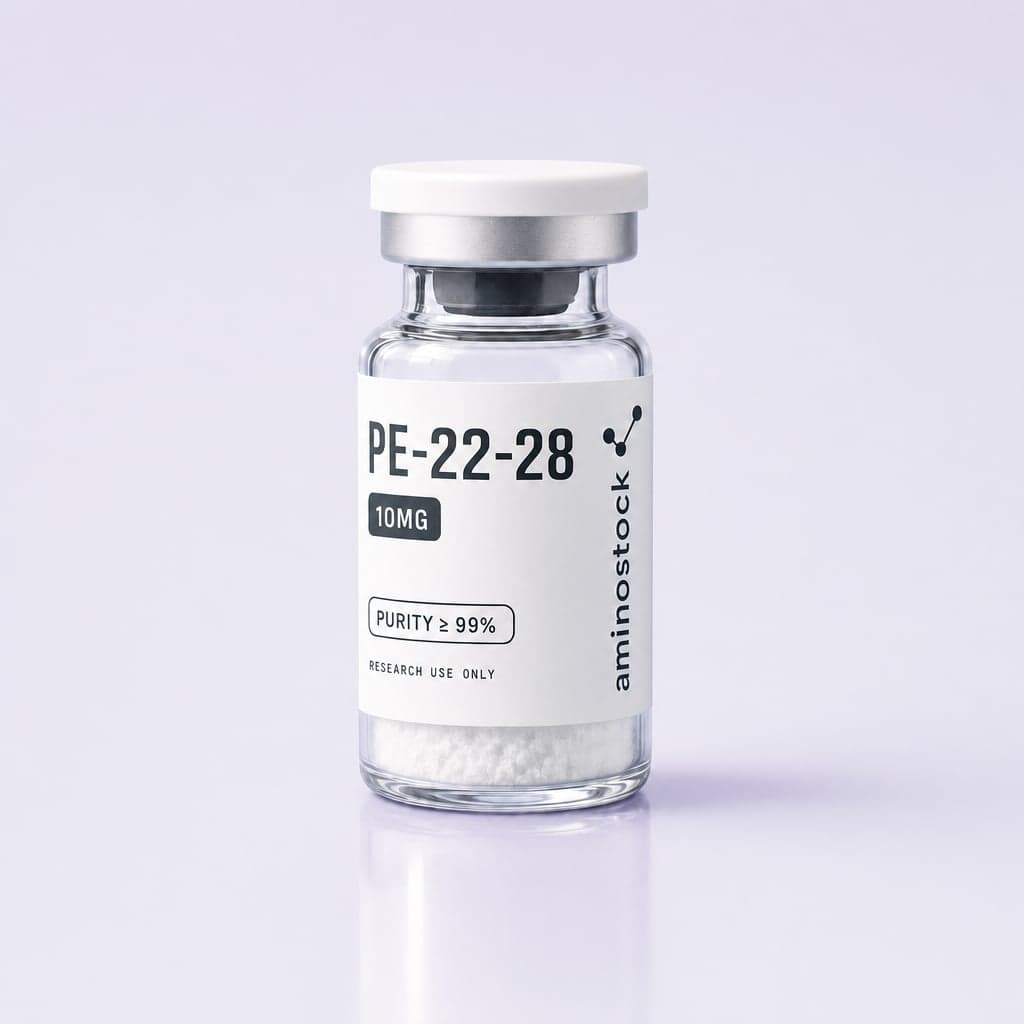
PE-22-28
A seven-amino-acid peptide derived from the spadin sequence, studied in animal models as a TREK-1 channel blocker in neuroplasticity research.
Quantity
$39.99
Bundle & save
Order by 3:00 PM ET for same-day dispatch
Cutoff 3:00 PM ET · same-day dispatch
Estimated arrival in 2 business days
Overnight shipping available
Free shipment protection included
PE-22-28
1 × 10mg · $39.99
99% purity, QC passed
HPLC + mass-spec verified
Shipment protection
Free on every order
Free shipping over $150
Same-day dispatch before 3PM ET
About PE-22-28
Structure and research context
PE-22-28 is a seven-amino-acid peptide designed from spadin, a 17-residue peptide also called PE 12-28. Spadin is released from the propeptide produced when neurotensin receptor 3 (NTSR3, also known as sortilin) matures. Investigators designed PE 22-28 after identifying the products formed when spadin breaks down in blood, with the aim of extending spadin's short in vivo duration of action. Its molecular target is TREK-1, a two-pore-domain (K2P) potassium channel.
PE-22-28 in the research literature
In patch-clamp recordings from HEK cells expressing TREK-1, PE 22-28 inhibited the channel with an IC50 of 0.12 nM, while spadin gave 40-60 nM in the same system. Various modifications to the N- or C-terminus either kept or abolished channel inhibition without changing binding affinity. In mice, the reported duration of action extended to about 23 hours, against 7 hours for spadin. PE 22-28 and its analogs increased PSD-95 expression in cultured mouse cortical neurons and were associated with hippocampal neurogenesis after four days.
In studies of the parent peptide, spadin bound TREK-1 with an affinity of about 10 nM and blocked TREK-1 currents in COS-7 cells and hippocampal neurons. It did not inhibit the related K2P channels TREK-2, TRAAK, TASK or TRESK.
Summarized from peer-reviewed literature for research context only; not a product claim. PubMed: 28955242 · 20405001 · 21807005 · 30291907 · 25080852
PE-22-28 Certificate of Analysis
Third-party tested · Independent analytical lab
10mg
99.75%latest
| Tested | Measured | Purity |
|---|---|---|
| Jun 2026 | 12.86mg | 99.75% |
| Jan 2026 | 11.81mg | 99.81% |
Frequently researched together
Commonly studied alongside PE-22-28.
Compound information
Technical specifications
Storage & stability
- ❄️
Lyophilized (powder)
-20°C · stable 2+ years
- ❄️
Reconstituted
2–8°C · use within 30 days
PE-22-28 sources & references
Peer-reviewed literature, for research context
- Frontiers in pharmacology
Shortened Spadin Analogs Display Better TREK-1 Inhibition, In Vivo Stability and Antidepressant Activity
2017·DOI: 10.3389/fphar.2017.00643·PMID: 28955242Djillani A, Pietri M, Moreno S, Heurteaux C, Mazella J, Borsotto M
View source - PLoS biology
Spadin, a sortilin-derived peptide, targeting rodent TREK-1 channels: a new concept in the antidepressant drug design
2010·DOI: 10.1371/journal.pbio.1000355·PMID: 20405001Mazella J, Pétrault O, Lucas G, Deval E, Béraud-Dufour S, Gandin C
View source - Neuropharmacology
Spadin as a new antidepressant: absence of TREK-1-related side effects
2012·DOI: 10.1016/j.neuropharm.2011.07.019·PMID: 21807005Moha Ou Maati H, Veyssiere J, Labbal F, Coppola T, Gandin C, Widmann C
View source
More in Neuro
Every Neuro research compound in the catalog.
Important research notice
Not for human consumption. This product is sold exclusively for laboratory and in vitro research. It is not intended to diagnose, treat, cure, or prevent any disease.
Any research findings referenced on this page are drawn from published, peer-reviewed literature and are provided for educational context only. They are not product claims and should not be read as medical advice.
By purchasing, you confirm you are a qualified researcher and will handle this material in accordance with all applicable laws and institutional guidelines.