For laboratory research use only — not for human or veterinary use. Not evaluated by the U.S. FDA.
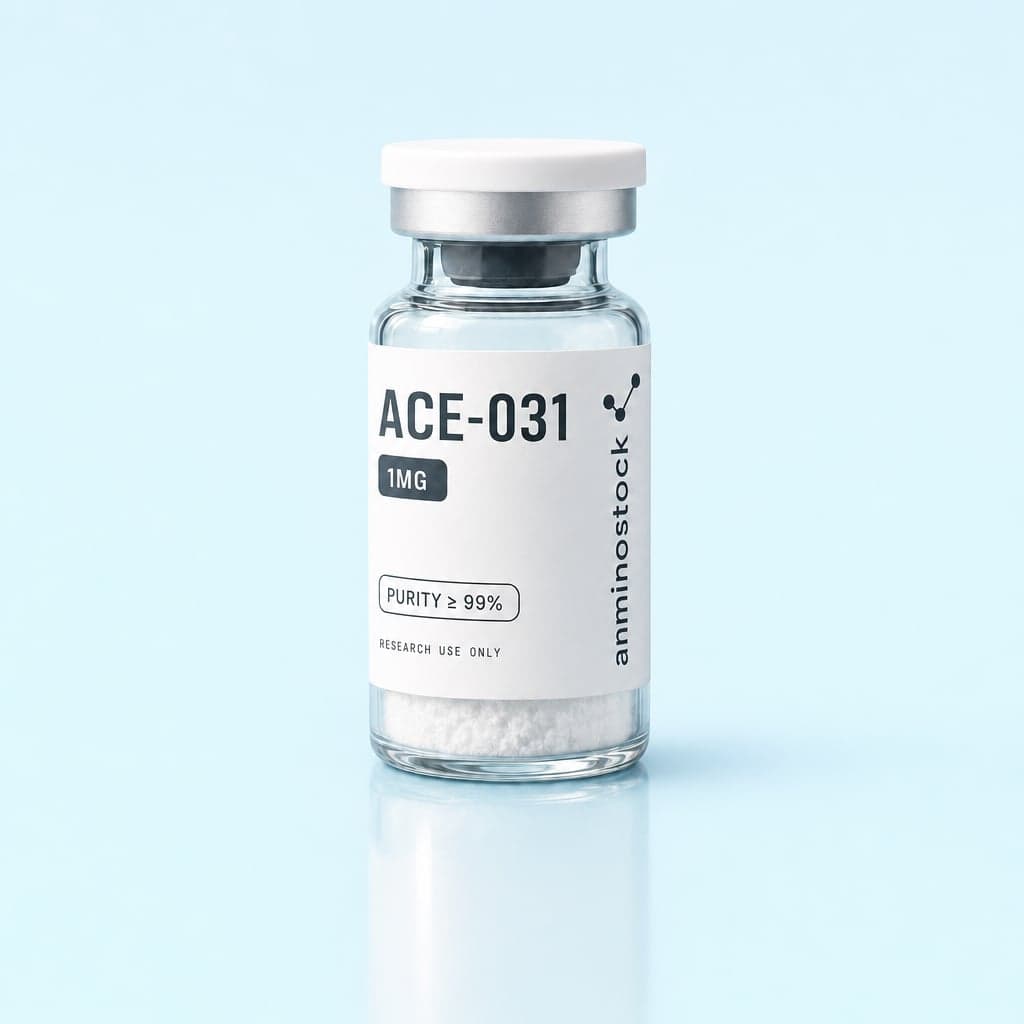
Growth Factor Analog Peptide
ACE-031
A soluble activin receptor type IIB fusion construct that acts as a myostatin ligand trap, studied in research models of muscle-mass regulation.
Quantity
$138.99
Bundle & save
Order by 3:00 PM ET for same-day dispatch
Cutoff 3:00 PM ET · same-day dispatch
Estimated arrival in 2 business days
Overnight shipping available
Free shipment protection included
ACE-031
1 × 1mg · $138.99
99% purity, QC passed
HPLC + mass-spec verified
Shipment protection
Free on every order
Free shipping over $150
Same-day dispatch before 3PM ET
About ACE-031
Structure and research context
ACE-031, also written ActRIIB-Fc or ramatercept, is not a peptide but a recombinant fusion protein: the extracellular ligand-binding region of the activin receptor type IIB, a single-transmembrane serine/threonine kinase receptor, joined to the Fc portion of immunoglobulin G1. Because the extracellular domain retains its ligand-binding surface but has no signalling kinase, the construct acts as a soluble decoy, or ligand trap, that sequesters transforming growth factor-beta superfamily ligands before they can engage receptors at the cell surface.
ACE-031 in the research literature
Kinetic characterisation of the soluble chimera showed that GDF-8 (myostatin) and GDF-11 bind the ActRIIB extracellular domain with affinities comparable to activin A, a known high-affinity ligand, while BMP-2 and BMP-7 bind at least 100-fold more weakly. Site-directed mutagenesis distinguished the binding modes: substitutions at ActRIIB Leu79 abolished binding to activin A but not to GDF-11. The C-terminal portion of the extracellular domain proved necessary for activity of the chimera, whereas glycosylation was not required for binding activin A or GDF-11.
Structural work on an ActRIIB-activin A complex showed the receptor binding at the outer edges of the ligand finger regions in a mode differing from TGF-beta3. In wild-type mice, a soluble form of the type IIB receptor produced effects that were attenuated but not abolished in myostatin-null animals, which was read as evidence that ligands besides myostatin signal through activin type II receptors.
Summarized from peer-reviewed literature for research context only; not a product claim. PubMed: 20385559 · 12660162 · 16330774 · 41686840
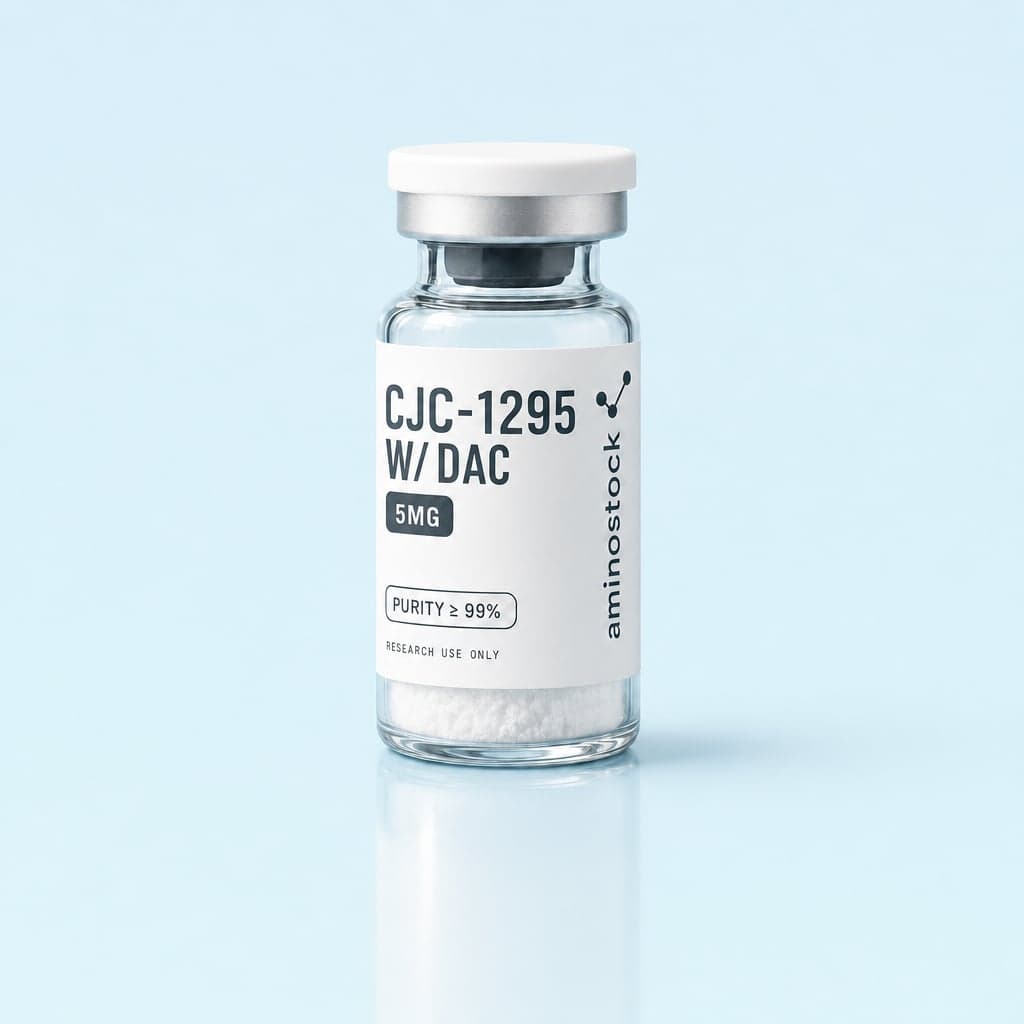
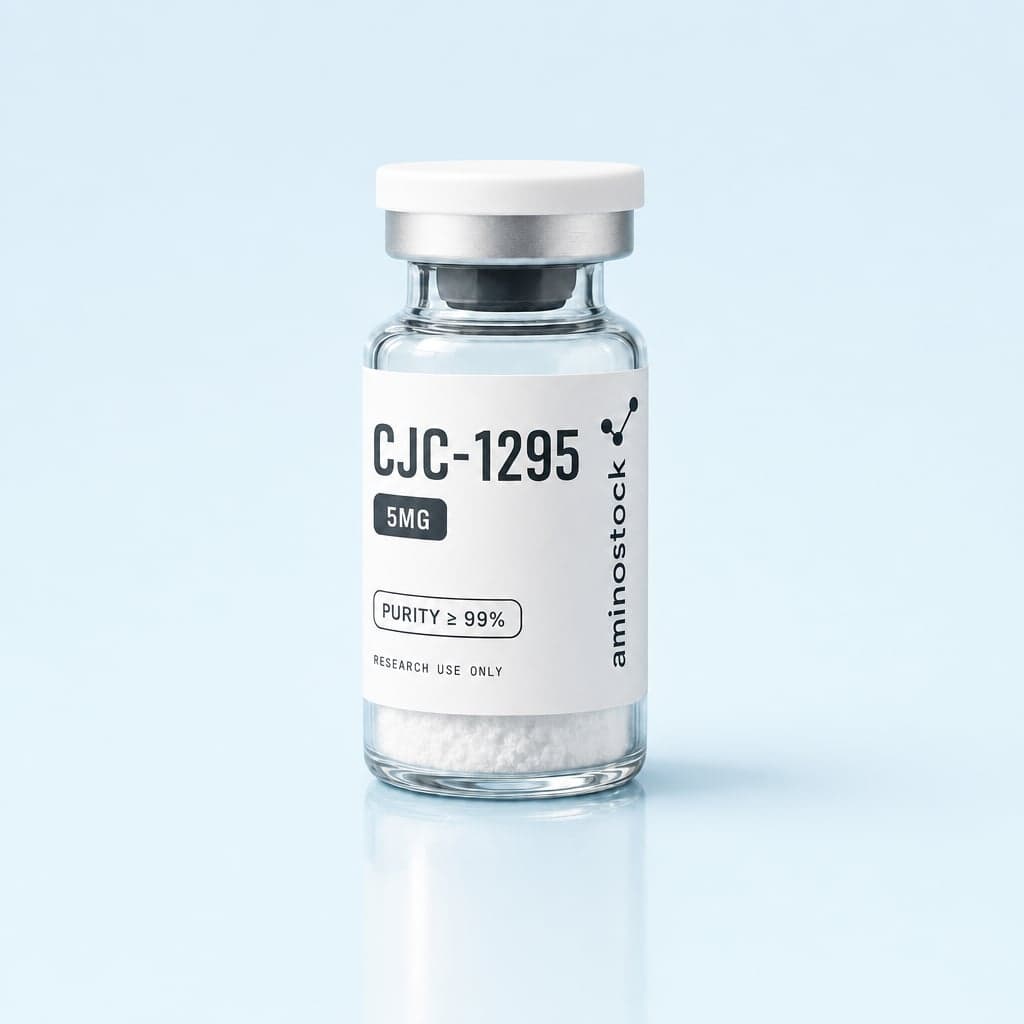
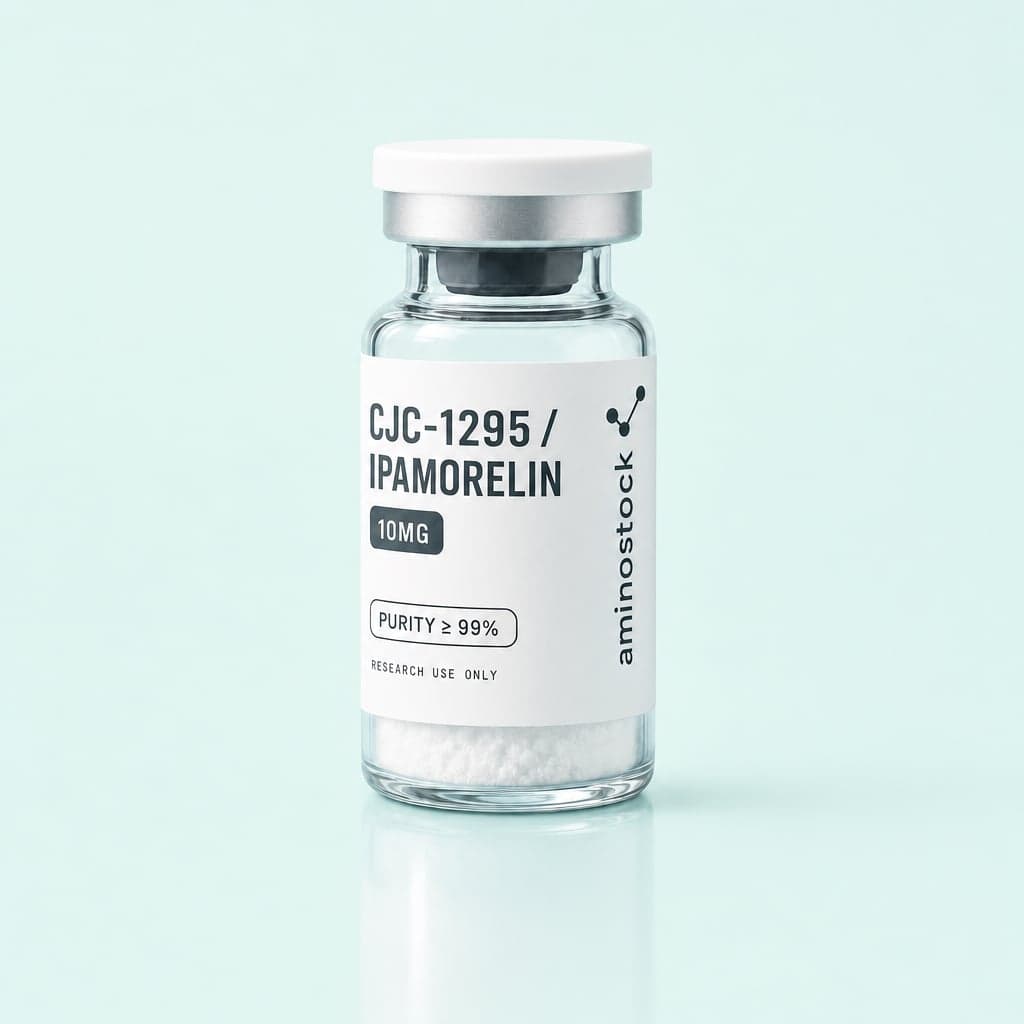
Frequently researched together
Commonly studied alongside ACE-031.
Compound information
Technical specifications
Storage & stability
- ❄️
Lyophilized (powder)
-20°C · stable 2+ years
- ❄️
Reconstituted
2–8°C · use within 30 days
ACE-031 sources & references
Peer-reviewed literature, for research context
- Muscle & nerve
Myostatin inhibitor ACE-031 treatment of ambulatory boys with Duchenne muscular dystrophy: Results of a randomized, placebo-controlled clinical trial
2017·DOI: 10.1002/mus.25268·PMID: 27462804Campbell C, McMillan HJ, Mah JK, Tarnopolsky M, Selby K, McClure T
View source - Muscle & nerve
A single ascending-dose study of muscle regulator ACE-031 in healthy volunteers
2013·DOI: 10.1002/mus.23539·PMID: 23169607Attie KM, Borgstein NG, Yang Y, Condon CH, Wilson DM, Pearsall AE
View source - PloS one
ACE-031, a soluble activin type IIB receptor, increases muscle mass and strength in the common marmoset (Callithrix jacchus)
2026·DOI: 10.1371/journal.pone.0342666·PMID: 41686840Cadena SM, Bogdanovich S, Khurana TS, Pullen A, Pearsall RS, Curran E
View source
More in Secretagogue
Every Secretagogue research compound in the catalog.
Important research notice
Not for human consumption. This product is sold exclusively for laboratory and in vitro research. It is not intended to diagnose, treat, cure, or prevent any disease.
Any research findings referenced on this page are drawn from published, peer-reviewed literature and are provided for educational context only. They are not product claims and should not be read as medical advice.
By purchasing, you confirm you are a qualified researcher and will handle this material in accordance with all applicable laws and institutional guidelines.