For laboratory research use only — not for human or veterinary use. Not evaluated by the U.S. FDA.
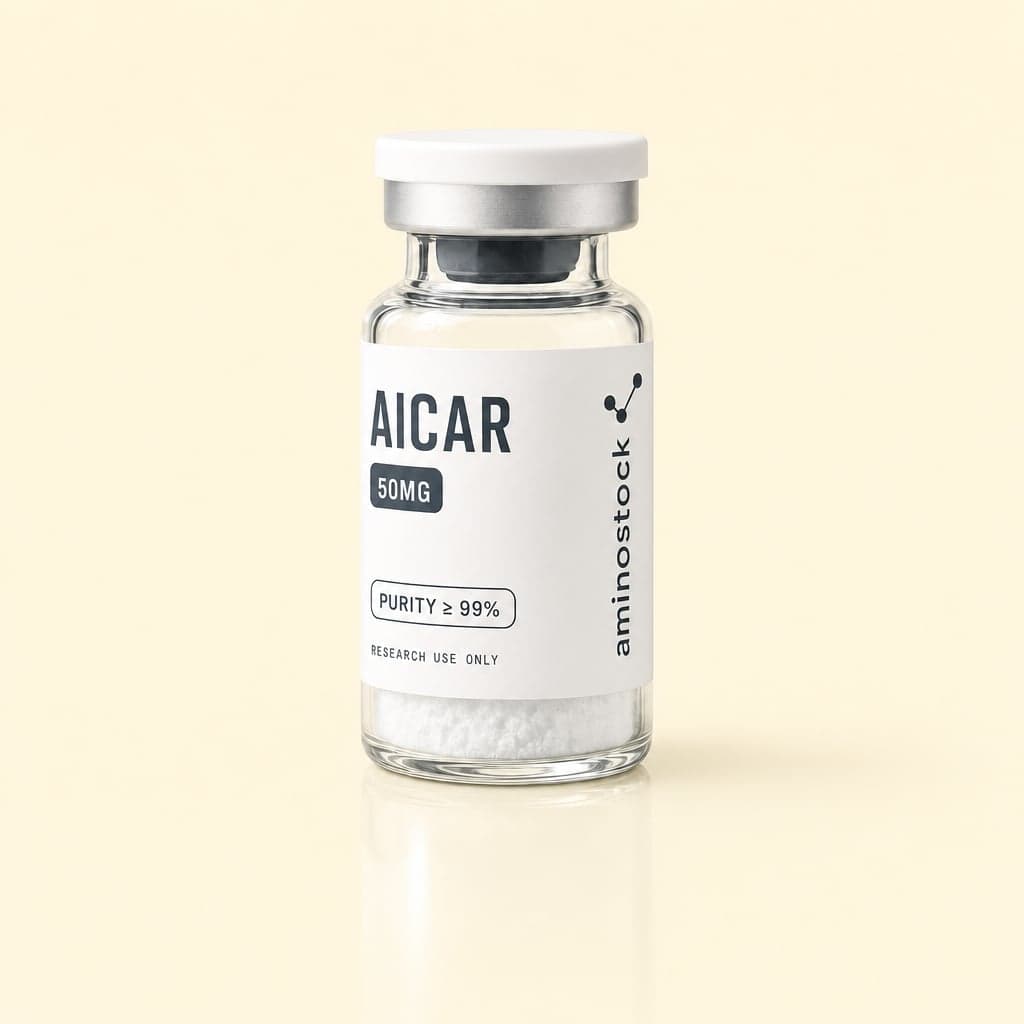
Metabolic Compound
AICAR
A nucleoside analog and AMP-activated protein kinase activator, widely used in metabolic research as a pharmacological tool for studying AMPK-dependent pathways.
Quantity
$49.99
Bundle & save
Order by 3:00 PM ET for same-day dispatch
Cutoff 3:00 PM ET · same-day dispatch
Estimated arrival in 2 business days
Overnight shipping available
Free shipment protection included
AICAR
1 × 50mg · $49.99
99% purity, QC passed
HPLC + mass-spec verified
Shipment protection
Free on every order
Free shipping over $150
Same-day dispatch before 3PM ET
About AICAR
Structure and research context
AICAR (acadesine, AICA riboside; 5-aminoimidazole-4-carboxamide ribonucleoside) is a small-molecule nucleoside analogue rather than a peptide, with the formula C9H14N4O5 and a molar mass of 258.23 g/mol. Inside cells it is converted to its monophosphorylated derivative ZMP, which mimics both activating effects of AMP on AMP-activated protein kinase (AMPK): direct allosteric activation and promotion of phosphorylation by an upstream kinase. It has long been one of the most commonly used pharmacological modulators of AMPK activity in laboratory research.
AICAR in the research literature
In rat hepatocytes, AICAR activated AMPK without perturbing cellular ATP, ADP or AMP content, caused phosphorylation and inactivation of the AMPK target 3-hydroxy-3-methylglutaryl-coenzyme A reductase, and almost completely halted fatty acid and sterol synthesis. In isolated adipocytes it antagonized isoprenaline-induced lipolysis, providing intact-cell evidence for AMPK regulation of hormone-sensitive lipase activation.
A systematic review has since cautioned that many AICAR effects once attributed to AMPK activation are in fact AMPK-independent, spanning metabolism, hypoxia, exercise and nucleotide synthesis, and calls for care when interpreting AICAR-based studies of AMPK signaling.
Summarized from peer-reviewed literature for research context only; not a product claim. PubMed: 7744080 · 18674809 · 34064363
Frequently researched together
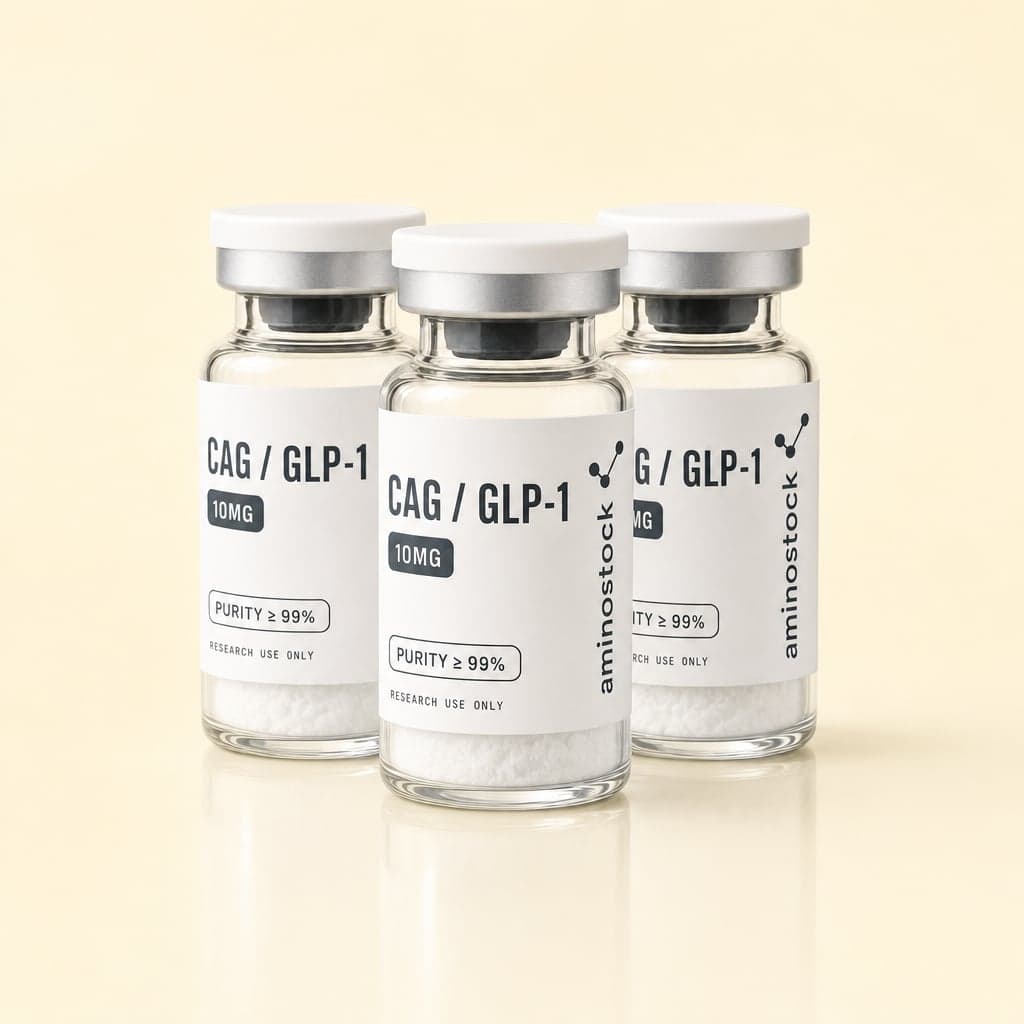
Commonly studied alongside AICAR.
Compound information
Technical specifications
Molecular profile
| Type | AICA ribonucleotide (AMP analog / AMPK activator) |
| CAS number | 2627-69-2 |
| Molecular weight | 258.23 g/mol |
| Formula | C9H14N4O5 |
Storage & stability
- ❄️
Lyophilized (powder)
-20°C · stable 2+ years
- ❄️
Reconstituted
2–8°C · use within 30 days
AICAR sources & references
Peer-reviewed literature, for research context
- Cells
AICAr, a Widely Used AMPK Activator with Important AMPK-Independent Effects: A Systematic Review
2021·DOI: 10.3390/cells10051095·PMID: 34064363Višnjić D, Lalić H, Dembitz V, Tomić B, Smoljo T
View source - Blood
Acadesine activates AMPK and induces apoptosis in B-cell chronic lymphocytic leukemia cells but not in T lymphocytes
2003·DOI: 10.1182/blood-2002-07-2339·PMID: 12522004Campàs C, Lopez JM, Santidrián AF, Barragán M, Bellosillo B, Colomer D
View source - Biochemical and biophysical research communications
AICAR induces AMPK-independent programmed necrosis in prostate cancer cells
2016·DOI: 10.1016/j.bbrc.2016.04.077·PMID: 27103440Guo F, Liu SQ, Gao XH, Zhang LY
View source
More in Metabolic
Every Metabolic research compound in the catalog.
Important research notice
Not for human consumption. This product is sold exclusively for laboratory and in vitro research. It is not intended to diagnose, treat, cure, or prevent any disease.
Any research findings referenced on this page are drawn from published, peer-reviewed literature and are provided for educational context only. They are not product claims and should not be read as medical advice.
By purchasing, you confirm you are a qualified researcher and will handle this material in accordance with all applicable laws and institutional guidelines.