For laboratory research use only — not for human or veterinary use. Not evaluated by the U.S. FDA.
Cellular Peptide
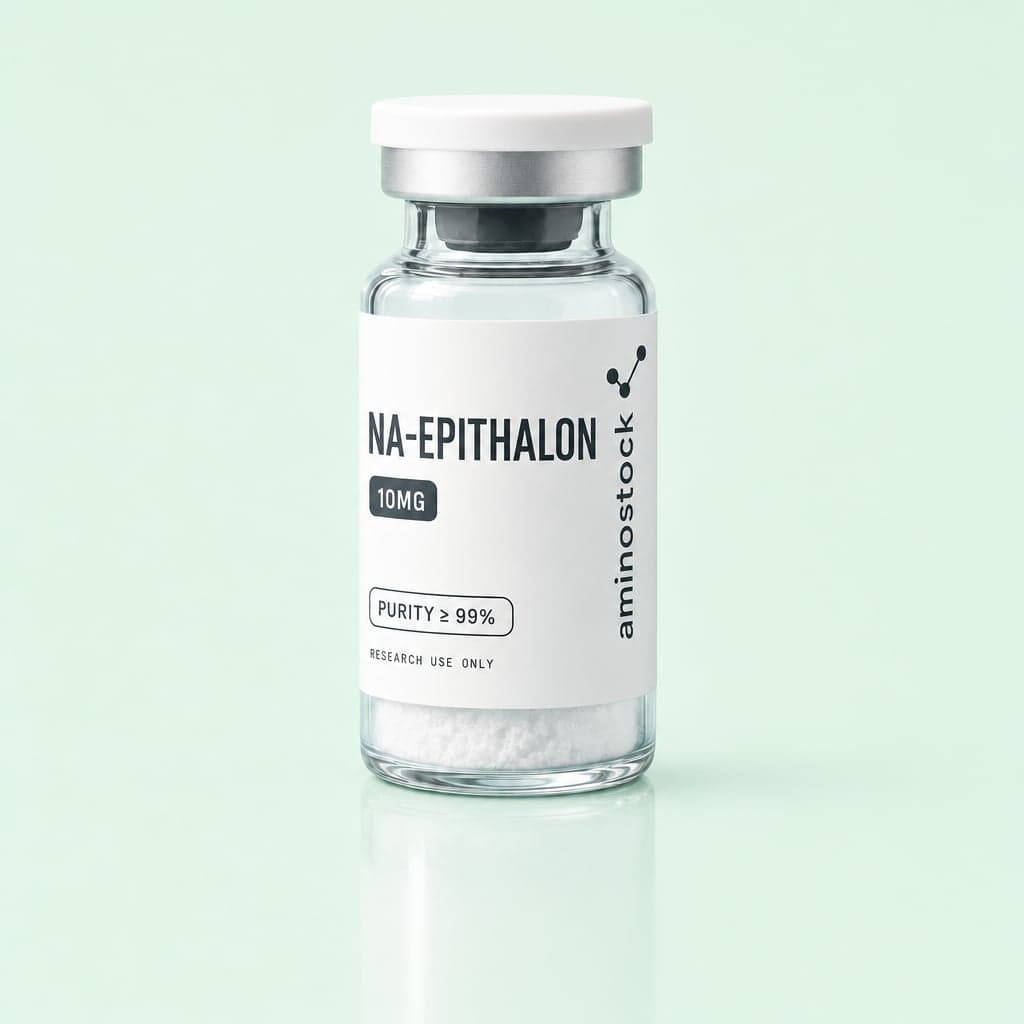
N-Acetyl Epithalon Amidate
An N-terminally acetylated, C-terminally amidated analog of epithalon, modified at both termini — a common strategy for improving peptide stability — and studied alongside the parent peptide in telomere and pineal-signaling research.
Size
Quantity
$44.99
Bundle & save
Order by 3:00 PM ET for same-day dispatch
Cutoff 3:00 PM ET · same-day dispatch
Estimated arrival in 2 business days
Overnight shipping available
Free shipment protection included
N-Acetyl Epithalon Amidate
1 × 10mg · $44.99
99% purity, QC passed
HPLC + mass-spec verified
Shipment protection
Free on every order
Free shipping over $150
Same-day dispatch before 3PM ET
About N-Acetyl Epithalon Amidate
Structure and research context
N-Acetyl Epithalon Amidate is a terminally modified analog of the tetrapeptide epithalon (Ala-Glu-Asp-Gly, AEDG), carrying an acetyl group on the N-terminal alanine and an amide in place of the free carboxyl group of the C-terminal glycine. The parent sequence was synthesized on the basis of the amino acid composition of epithalamin, a bovine pineal gland extract. No peer-reviewed studies indexed in PubMed were identified that examine the acetylated, amidated analog itself, so the available literature concerns the unmodified parent peptide.
N-Acetyl Epithalon Amidate in the research literature
Published work on the parent tetrapeptide has examined telomere biology in cell culture. Studies reported that unmodified AEDG induced expression of the telomerase catalytic subunit, telomerase activity and telomere elongation in telomerase-negative fetal fibroblast cultures, and a 2025 study reported hTERT mRNA upregulation and increased telomerase activity in normal epithelial and fibroblast cell lines. In rat pinealocyte culture, the parent peptide was reported to increase AANAT and pCREB synthesis. Whether terminal acetylation and amidation alter any of these activities has not been reported in the indexed literature.
Summarized from peer-reviewed literature for research context only; not a product claim. PubMed: 40141333 · 12937682 · 40908429 · 22816096
N-Acetyl Epithalon Amidate Certificate of Analysis
Third-party tested · Independent analytical lab
20mg
98.57%latest
| Tested | Measured | Purity |
|---|---|---|
| Jun 2026 | 20.63mg | 98.57% |
| Jun 2026 | 21.63mg | 99.05% |
| Jan 2026 | 20.81mg | 99.25% |
Frequently researched together
Commonly studied alongside N-Acetyl Epithalon Amidate.
Compound information
Technical specifications
Molecular profile
| Type | N-acetylated, amidated Epithalon (AEDG) analog |
| Amino acids | 4 |
Storage & stability
- ❄️
Lyophilized (powder)
-20°C · stable 2+ years
- ❄️
Reconstituted
2–8°C · use within 30 days
N-Acetyl Epithalon Amidate sources & references
Peer-reviewed literature, for research context
- International journal of molecular sciences
Overview of Epitalon-Highly Bioactive Pineal Tetrapeptide with Promising Properties
2025·DOI: 10.3390/ijms26062691·PMID: 40141333Araj SK, Brzezik J, Mądra-Gackowska K, Szeleszczuk Ł
View source - Biogerontology
Epitalon increases telomere length in human cell lines through telomerase upregulation or ALT activity
2025·DOI: 10.1007/s10522-025-10315-x·PMID: 40908429Al-Dulaimi S, Thomas R, Matta S, Roberts T
View source - Neuro endocrinology letters
Pineal-regulating tetrapeptide epitalon improves eye retina condition in retinitis pigmentosa
2002·PMID: 12195242Khavinson V, Razumovsky M, Trofimova S, Grigorian R, Razumovskaya A
View source - Stem cell reviews and reports
The Antioxidant Tetrapeptide Epitalon Enhances Delayed Wound Healing in an in Vitro Model of Diabetic Retinopathy
2025·DOI: 10.1007/s12015-025-10911-x·PMID: 40493162Gatta M, Dovizio M, Milillo C, Ruggieri AG, Sallese M, Antonucci I
View source
More in Cellular
Every Cellular research compound in the catalog.
Important research notice
Not for human consumption. This product is sold exclusively for laboratory and in vitro research. It is not intended to diagnose, treat, cure, or prevent any disease.
Any research findings referenced on this page are drawn from published, peer-reviewed literature and are provided for educational context only. They are not product claims and should not be read as medical advice.
By purchasing, you confirm you are a qualified researcher and will handle this material in accordance with all applicable laws and institutional guidelines.